
Virtual Boxing Training for Remote Workers: 2026 Guide
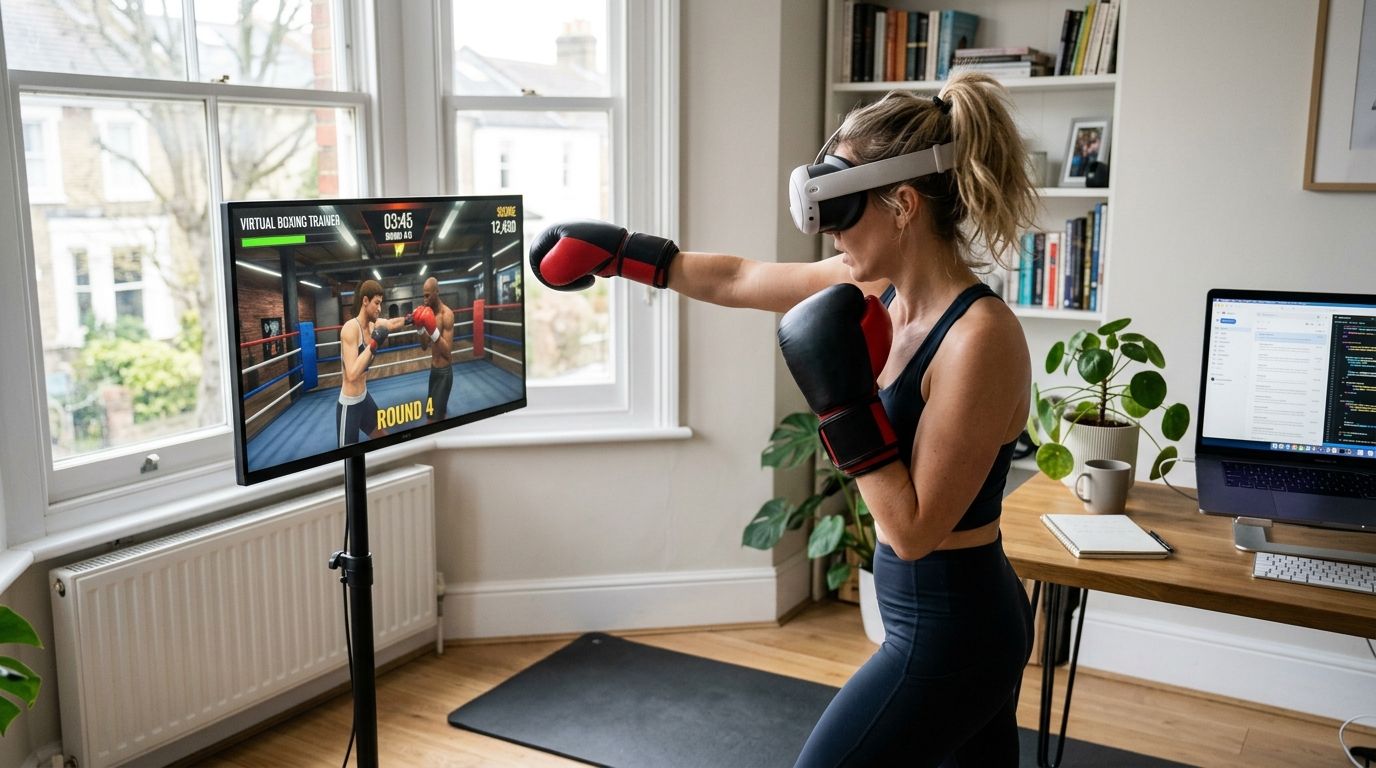
Virtual boxing training for remote workers is live, real-time boxing instruction delivered over Zoom so you can train stance, footwork, and mitt-adjacent mechanics without leaving your home office. Remote workers need shorter, flexible sessions that fit between meetings, a small footprint that works in an apartment or garage, and a coach who can actually see your form on camera instead of a pre-recorded app that can't correct a dropped guard.
• Virtual boxing training for remote workers means live Zoom coaching, not pre-recorded app workouts, and that distinction determines whether your form actually improves in 2026. • Better Through Boxing runs live 1-on-1 sessions with Coach Chris Persaud built around real stance, footwork, and defense work, not just cardio. • A 6-week Better Through Boxing Basics Program fits the remote-worker calendar better than daily gym commutes. • Home equipment needs for this segment are minimal: wraps, gloves, and floor space, not a full bag rig. • Skipping live feedback is the single biggest mistake remote workers make when they start virtual boxing training.
Why virtual boxing training matters for remote workers
Remote work compresses your day into back-to-back video calls and almost zero unstructured movement. Boxing forces your hips, shoulders, and feet to work against a desk-shaped posture that builds up all day. The appeal for this segment isn't novelty, it's logistics: no commute to a gym, no locker room, no schedule conflict with a 9-to-5 that already ends on Zoom. The catch is that most "virtual boxing" content marketed to remote workers is a looping video of someone else's workout. That teaches cardio, not boxing. Real stance work, weight transfer, and the Core 4 punches only stick when a coach on the other end of the camera can call out a dropped hand or a flat-footed pivot in the moment it happens. GET A TRAINING SPACE THAT WORKS IN A HOME OFFICE You don't need a garage gym to start. You need enough floor space to shift your feet and enough camera distance for a coach to see your full stance. • Clear a 6x6 foot area, minimum, for footwork and shadow work • Position your laptop or phone at chest height, roughly 6-8 feet back • Use a rug or mat with grip if you're on hardwood or tile • Keep a water bottle and towel within reach, not across the room • Test your Zoom audio and video 10 minutes before the first session, not during it CHOOSE GEAR THAT FITS AN APARTMENT, NOT A GYM Skip the wall-mounted heavy bag until you know you'll stick with it. Start with the smallest kit that lets a coach correct your mechanics. • Hand wraps, 120-180 inches, for wrist support during mitt-style drills • A pair of beginner boxing gloves in the 12-14oz range for home shadow and pad work • A jump rope for warm-up conditioning between calls • Optional: a freestanding bag only after 4-6 weeks of technique work, not before For a deeper breakdown of what's actually worth buying versus what collects dust, the home boxing equipment for beginners guide covers it segment by segment. BOOK A LIVE SESSION, NOT A PRE-RECORDED PROGRAM This is where remote workers waste the most money in 2026: subscribing to an app library instead of booking a coach who watches your stance live. • Confirm the session is real-time video, not a scheduled playback • Ask whether the coach corrects form during the round or only after • Check if sessions are 1-on-1 or a group call with 10+ people on mute • Verify the coach works with beginners specifically, not only competitive fighters Better Through Boxing runs private, live Zoom lessons with Coach Chris Persaud built for this exact gap. The boxing programs for busy professionals breakdown compares scheduling formats if your calendar is the real constraint. LEARN THE CORE 4 PUNCHES BEFORE ANYTHING ELSE Don't start with combinations. Start with the four punches that make up nearly every combination you'll ever throw: jab, cross, lead hook, rear hook. • Drill the jab alone for the first full session, footwork included • Add the cross only once your jab returns to guard without dropping • Introduce hooks after your hips rotate correctly on the straight punches • Shadow box each punch for 3 rounds before adding a partner drill or mitt substitute BUILD CONDITIONING AROUND YOUR MEETING SCHEDULE, NOT AGAINST IT Remote workers don't need marathon sessions. A focused 20-30 minute block between calls does more for form retention than an hour you rush through exhausted. • Warm up for 5 minutes with rope work or shadow boxing • Run technique drills in 3-minute rounds with 1-minute rest, matching real fight pacing • Close with 2-3 rounds of reaction or footwork drills, not just static cardio • Log which days you trained so a coach can adjust the next session's focus TRACK FOOTWORK AND DEFENSE ON CAMERA, NOT JUST PUNCH COUNT Most home boxing tracking apps count punches thrown. That's meaningless if your footwork is stationary and your guard drops after ten reps. • Ask your coach to flag foot position at the end of each round • Record one session a week and compare stance width against the last one • Watch for a lazy lead hand between combinations, the most common beginner leak • Note whether you're slipping and pivoting off the back foot or just leaning AVOID BURNOUT BY ROTATING STRESS-RELIEF SESSIONS IN Not every session needs to be technical. Remote work stress builds fast, and pure technique drilling can feel like another task on the list. • Schedule one session per week focused on bag or pad-style output, not correction • Use post-workday sessions to close out the laptop, not open it back up after • Pair heavier conditioning days with lighter technique days to avoid plateauing Book a live virtual boxing session Train stance, footwork, and defense over Zoom with Coach Chris Persaud.
Comparison: virtual boxing options for remote workers
The verdict for remote workers who actually want to learn boxing, not just sweat: live 1-on-1 virtual coaching wins on form correction every other option can't match. Anyone deciding between formats should read what private boxing lessons cost before comparing to a subscription app, since the per-session math often looks different than expected.
Common mistakes remote workers make
• Training only from pre-recorded video and never getting a coach's eyes on their actual stance • Skipping footwork entirely because their home space feels too small, when a 6x6 area is enough • Jumping straight to combinations before the jab and cross are grooved on their own • Scheduling one long weekend session instead of shorter sessions spread across the work week • Buying a full heavy bag setup in week one before confirming they'll stick with technique work past month one
FAQ
Is virtual boxing training effective for remote workers in 2026? Yes, live virtual boxing training is effective when a coach corrects form in real time over video, not when it's a pre-recorded workout loop. The difference shows up in stance, footwork, and defense retention within the first few weeks. How much space do I need for virtual boxing training at home? A 6x6 foot clear area is enough for footwork, shadow boxing, and shadow-style pad work. You need more camera distance than floor space, roughly 6-8 feet back so a coach can see your full stance. What's the difference between virtual boxing training and a boxing app? Virtual boxing training is live, real-time coaching over Zoom where a coach watches and corrects your form. A boxing app plays pre-recorded workouts with no feedback loop, which means mechanical errors go uncorrected indefinitely. Do I need boxing gloves to start virtual training? You need hand wraps and a pair of beginner gloves for shadow and pad-style drills, but not a heavy bag on day one. Most coaches build the first sessions around stance and the Core 4 punches without bag contact. How long should a virtual boxing session be for a busy remote worker? A focused 20-30 minute session between meetings retains more technique than a rushed hour-long block. Consistency across the week matters more than session length for this segment. Can virtual boxing replace gym-based sparring training? Virtual boxing training builds stance, footwork, defense, and conditioning, but live sparring requires in-person contact work that video coaching can't replicate. Treat virtual sessions as the technical foundation before any in-person sparring. Is virtual boxing training good for stress relief during the work week? Yes, boxing's combination of footwork, output, and conditioning gives remote workers a physical reset that pure cardio doesn't replicate. Rotating one output-focused session into a weekly schedule works well alongside technical days. What should I look for in a virtual boxing coach? Confirm the coach runs live video sessions, works with beginners specifically, and corrects form during the round rather than only afterward. Group calls with ten or more people on mute rarely deliver the same correction quality as 1-on-1 coaching.
One last thing
The remote workers who stick with boxing past month one are almost never the ones who bought a heavy bag first. They're the ones who spent the first two or three sessions doing nothing but the jab and footwork on camera, with a coach calling out every dropped hand, before a single combination entered the picture in 2026.
Train with Coach Chris
Ready to put this into practice with a coach watching every rep? Better Through Boxing is private, 1-on-1 coaching with Christopher Persaud — CoachUp's #1 ranked NJ trainer. Train live online over Zoom from anywhere in the world, or work the mitts in person across New Jersey. Book a session at betterthroughboxing.com and get real-time corrections on your stance, footwork, and punches.
Train anywhere with the Ronin Box app
Voice-cued boxing workouts, round timer, and progress tracking — coached by Chris, right in your pocket.

Scan to install