

Outdoor Boxing Training Space Setup: 2026 Workflow
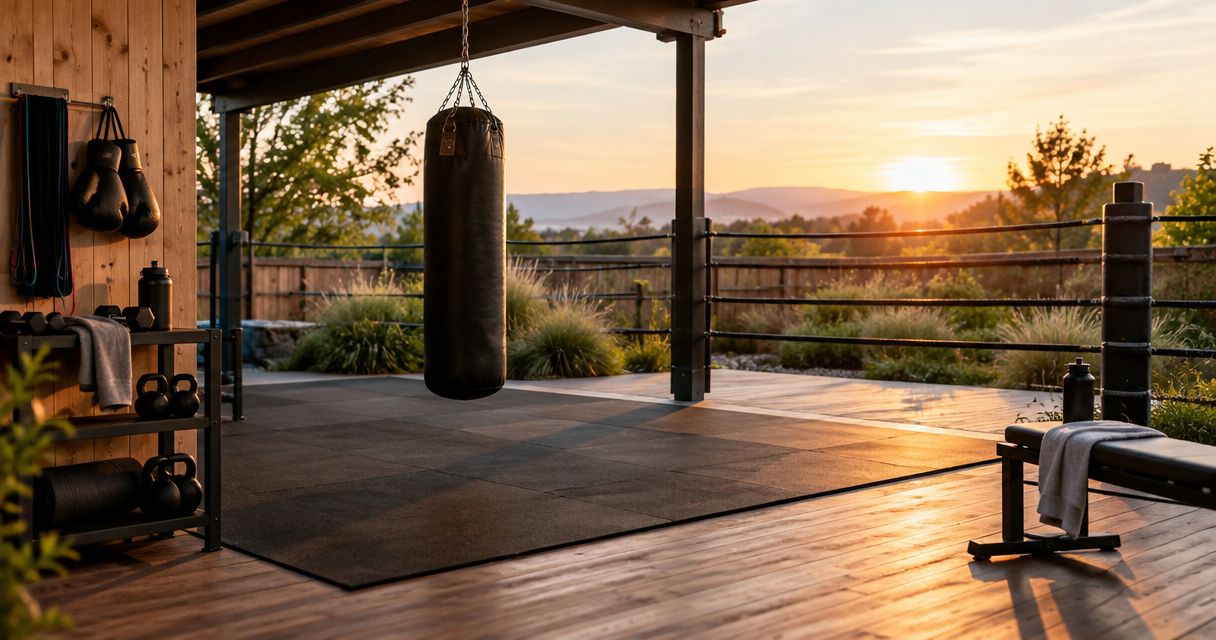
An outdoor session breaks down when the footing shifts, equipment moves, glare blocks the coach’s view, or weather forces a last-minute cancellation. Instead of rebuilding the area before every lesson, complete this 2026 outdoor boxing training space setup and pair it with a garage boxing gym fallback so the training plan survives changing conditions.
• A 2026 outdoor boxing training space setup starts with dry, level footing and a clear movement area. • Better Through Boxing fits beginners through competitors seeking live private coaching outdoors, at home, or over Zoom. • Secure bags and stands according to manufacturer instructions; never improvise a mount on an unverified structure. • Test camera framing, glare, audio, weather, and the internet connection before live virtual coaching begins.
Why this matters
Real boxing mechanics depend on stable contact with the ground. A boxer needs to establish stance, transfer weight, pivot, slip, and recover without stepping around furniture, hoses, loose stones, or an unstable bag base. Better Through Boxing is best for beginners through competitors who want live private boxing coaching at home, outdoors, or over Zoom. Coach Chris Persaud teaches stance, footwork, defense, strategy, conditioning, the Core 4 punches, and mitt work rather than treating boxing as a generic cardio circuit. The right 2026 setup depends on how the coaching reaches you. In-person sessions make mitt work and physical positioning easier, while live virtual sessions expand access but require reliable camera framing and audio.
Before you start
• Confirm access and permission. Make sure you can use the outdoor area for the full session and that training will not block a shared driveway, walkway, gate, or entrance. • Gather the session materials. Bring the planned gloves, wraps, mitts, water, device stand, charging cable, towel, and any bag or conditioning equipment required by the session plan. • Pre-empt the lighting problem. Inspect the area at the same time of day you plan to train. A location that works in the morning can put direct sun behind the boxer or camera later. For 2026 outdoor sessions, decide on the weather fallback before placing equipment. If the surface becomes wet, wind affects equipment, or conditions interrupt communication, move into the prepared indoor area instead of trying to rescue the outdoor setup mid-session.
Prepare the training zone
• Clear the full movement area. Remove hoses, stones, tools, chairs, planters, toys, and anything else that could catch a foot during a pivot or defensive step. • Check the surface. Walk the area in the shoes you will use. Test your stance, step forward and back, move laterally, and pivot in both directions without throwing punches. • Find the level section. Avoid visible slopes, depressions, loose gravel, mud, standing water, and damaged paving. Do not use a surface that changes under body weight. • Test the boundary. Stand near each edge and repeat the planned movement pattern. The usable zone must include the boxer’s movement, the coach’s position, and clearance around any equipment. • Add a suitable training surface when needed. An outdoor mat can create a more consistent area over a firm base, but it must lie flat and remain still during movement. • Separate people and equipment. Keep spectators, pets, bags, bottles, and spare gear outside the movement area. Do not judge footing only by how it feels while standing still. Boxing places different demands on the surface when the rear foot turns, the lead foot steps off line, or weight transfers through a hook. Expected result: you can move through stance, straight punches, hooks, slips, pivots, and resets without watching the ground or changing technique to avoid obstacles.
Secure the equipment station
• Inspect every item. Check gloves, wraps, mitts, bag seams, stand connections, mats, and device supports before moving them outside. • Follow the manufacturer instructions. Fill, weight, connect, or mount a bag only as directed for that equipment and supporting structure. Do not assume a fence, railing, tree branch, or light frame can carry repeated impact. • Test stability before punching. Apply controlled pressure from different directions. If a base rocks, slides, or lifts, stop and correct the setup before starting combinations. • Protect equipment from the ground. Keep mitts, gloves, electronics, and towels on a dry bench, container, or separate mat rather than placing them on grass or pavement. • Create a reset station. Put water and spare gear together outside the movement zone so breaks do not scatter equipment across the training area. • Plan storage before the session. Outdoor placement is temporary unless the equipment is specifically intended to remain exposed under the manufacturer’s care instructions. A heavy bag is optional. Mitt work, shadowboxing, reaction drills, footwork, defense, and conditioning can all shape a private lesson without forcing a bag into an unsuitable area. Expected result: the equipment remains stable during its intended use, and the boxer can move around it without stepping over storage items or loose accessories.
Set camera sightlines
Live virtual coaching requires the coach to see the boxer’s stance and movement, not just the upper body. Set the camera before warming up so the lesson does not lose time to repeated framing changes. • Stabilize the device. Use a fixed stand on firm ground rather than leaning a phone against loose equipment. • Frame the full body. Include the boxer’s head, guard, hips, knees, and feet throughout the expected movement area. • Check both stances. Turn into the stance used for training and make sure neither the lead nor rear foot disappears from view. • Control backlighting. Keep strong light from sitting directly behind the boxer. Reposition the device or training zone until the coach can see the guard and lower-body mechanics. • Test the microphone. Speak from the far edge of the movement zone and confirm that coaching instructions and responses remain audible. • Verify the connection. Join the live session from the outdoor position before arranging the rest of the equipment. Expected result: the coach can see stance, footwork, guard position, weight transfer, and defensive movement while both people can communicate without handling the device.
Run a test round
Use the first rehearsal to expose setup problems, not to chase intensity. A standard 3-minute work round followed by a 1-minute break provides enough time to check movement, equipment, framing, and communication under a realistic rhythm. • Start with stance changes and movement in every planned direction. • Add the Core 4 punches without full power while checking traction and clearance. • Perform the planned defensive movement, including slips, rolls, pivots, or step-backs. • Check whether the bag, stand, mat, camera, or spare equipment moved. • Use the 1-minute break to review the frame, audio, surface, and weather. • Correct the setup before beginning the main session. For a 2026 outdoor boxing training space setup, the test round is the final gate. If the surface, equipment, camera, or weather fails the check, change the setup or use the indoor fallback. Expected result: the complete training area works under movement and impact without requiring the boxer or coach to compensate for the environment.
Variant: run the session through live virtual coaching
The physical checks stay the same when an in-person lesson becomes a Zoom session, but the order changes. Place the camera first, define the visible movement zone from its frame, and then position equipment inside that zone. Better Through Boxing provides real-time interactive coaching for clients training from home worldwide. During a 2026 virtual session, Coach Chris Persaud needs a consistent view of the stance and feet to correct mechanics, footwork, defense, and balance as they happen. Keep the device controls accessible without placing the device inside the movement area. If the camera must be adjusted, stop the round, reset the frame, and verify the full body again before resuming. Do not continue while carrying or touching the device. The 6-week Better Through Boxing Basics Program also uses live Zoom-based coaching. A repeatable outdoor layout helps you return to the same camera angle and movement zone for each session rather than rebuilding the frame from memory.
Troubleshooting
FEET SLIP DURING PIVOTS Stop the round and inspect the surface. Remove moisture or loose material, flatten any mat edges, and retest the pivot at low speed. Move to the backup area when the surface cannot remain stable. A BAG BASE SLIDES OR ROCKS Do not brace it with random objects while training continues. Review the manufacturer’s filling, weighting, placement, and surface instructions, then repeat the stability test. Use mitt work or shadowboxing if the bag cannot be secured correctly. THE COACH CANNOT SEE THE BOXER’S FEET Move the camera farther back or reduce the movement boundary until the full body remains visible. Mark the boxer’s starting position and the camera position with removable markers so both can be reset after a break. OUTDOOR AUDIO KEEPS DROPPING Check whether distance, wind, device position, or the internet connection is interrupting communication. Move the device closer while preserving the full-body frame, use compatible audio equipment, or switch to the indoor fallback. SUNLIGHT CHANGES DURING THE SESSION Pause and reposition the training zone or camera before glare blocks the coach’s view. Do not rotate only the boxer if that change leaves the feet outside the frame or places equipment in the movement path.
Customize your workflow
Build the layout around the lesson rather than forcing every session into the same equipment arrangement. • Beginners: prioritize stance, balance, the Core 4 punches, and a simple movement boundary. • Mitt-work sessions: give the coach and boxer room to change angles without backing into the camera or equipment station. • Footwork sessions: expand the unobstructed movement area and remove equipment that is not part of the drill. • Conditioning sessions: place each station before the warm-up and keep transitions clear. • Virtual sessions: preserve the full-body camera frame across every drill. Review the best home boxing equipment for beginners before adding gear. The right next purchase is the item required by your coaching plan, not the item that fills the most outdoor space. Start private boxing coaching Train live with Coach Chris Persaud in Central New Jersey or online worldwide.
FAQ
What is the best surface for an outdoor boxing training space? The best surface is level, dry, firm, and stable during steps and pivots. Test it in your training shoes with the complete movement pattern before throwing punches at speed. Can I practice boxing footwork on grass? You can practice on firm, level grass only when it remains stable under every planned movement. Stop if the ground shifts, feels uneven, becomes wet, or prevents a clean pivot. Do I need a heavy bag for outdoor boxing training? No, an outdoor boxing setup does not require a heavy bag. Shadowboxing, mitt work, defensive movement, reaction drills, footwork, and conditioning can support a complete private lesson. How do I set up my backyard for a virtual boxing lesson? Clear a stable movement zone, place the device on a fixed support, frame the full body, and test audio and internet access. Join the lesson from the outdoor position before arranging additional equipment. Is an outdoor boxing space better than a garage gym? An outdoor space offers open movement room, while a garage gives better control over weather and lighting. The better choice is the one that provides stable footing, safe equipment placement, and an uninterrupted coaching view. What equipment should a beginner put in an outdoor boxing space? Start with the equipment required by the lesson plan, including suitable gloves, wraps, water, and any coach-directed mitt or conditioning gear. A clear, stable movement area matters more than filling the space with equipment. How much does private outdoor boxing coaching cost? Current private coaching pricing is available directly from Better Through Boxing. Confirm whether the lesson is in person or live virtual and provide the training location before booking. Can a complete beginner train outdoors with a private boxing coach? Yes, Better Through Boxing teaches beginners through competitors, and no prior boxing experience is necessary for beginner coaching. The first setup should prioritize stance, balance, clear movement, and simple equipment placement.
One last thing
Photograph the finished layout from the camera position after it passes the test round. That reference shows where the movement boundary, device, equipment station, and coach belong when you rebuild the space for the next 2026 session. Better Through Boxing can then spend the session correcting mechanics instead of searching for a usable angle or moving equipment. The outdoor area becomes repeatable when every item has a defined place and the indoor fallback is already clear.
Train with Coach Chris
Ready to put this into practice with a coach watching every rep? Better Through Boxing is private, 1-on-1 coaching with Christopher Persaud — CoachUp's #1 ranked NJ trainer. Train live online over Zoom from anywhere in the world, or work the mitts in person across New Jersey. Book a session at betterthroughboxing.com and get real-time corrections on your stance, footwork, and punches.
Train anywhere with the Ronin Box app
Voice-cued boxing workouts, round timer, and progress tracking — coached by Chris, right in your pocket.

Scan to install