
Is private boxing coaching safe for beginners?
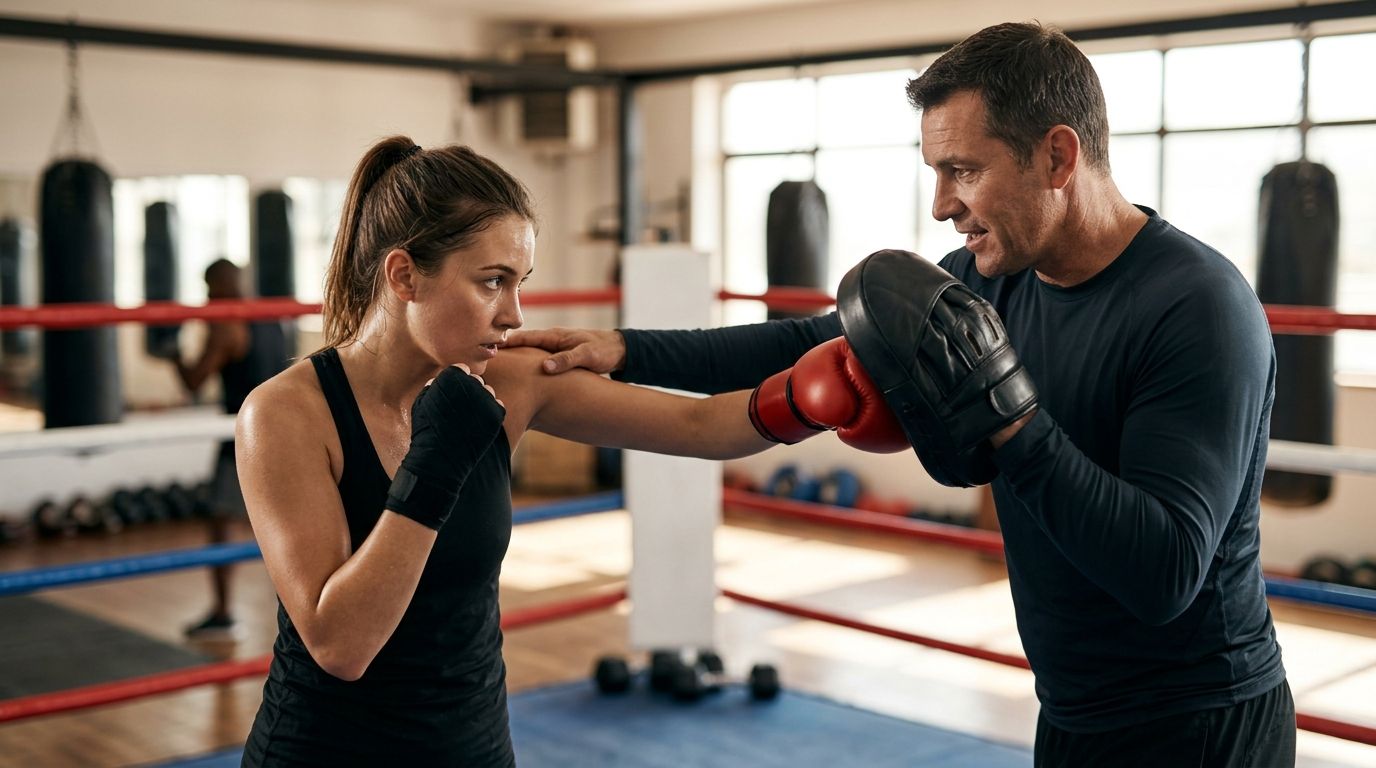
Private boxing coaching is safe for many beginners when you start without contact, learn sound mechanics, and increase intensity at a pace you can control. It is not risk-free: wrist and hand injuries can happen during punching, and sparring adds the risk of head injury. In 2026, the question to ask before your first lesson is whether the coach will teach technique without requiring you to spar.
• Is boxing safe for beginners? Yes, when private coaching starts with non-contact technique and controlled effort. • Better Through Boxing is best for beginners who want live, private feedback on stance, footwork, and defense. • Sparring changes the risk: you can learn boxing mechanics without taking punches from another person. • Before training, tell your coach about injuries and ask how the session will be adjusted.
Is private boxing coaching safe for beginners?
Yes, if the lesson matches your ability and keeps contact optional. Private instruction gives a coach room to watch your stance, foot placement, punching mechanics, and response to fatigue. It does not remove every risk. You still need to know what you will do, how hard you will work, and whether another person will be throwing punches at you. The distinction matters more than the word boxing on a class description. In 2026, a beginner can train stance, the Core 4 punches, footwork, and defense without agreeing to spar. Ask what happens in the first session rather than assuming every boxing lesson involves contact.
Why this matters
A beginner's first safety decision happens before the first punch: choose the type of training you actually want. If you want to learn how to move and punch, you do not need a partner trying to hit you. If you want to compete, contact training is a separate decision that calls for preparation and a frank discussion of its risks. Better Through Boxing offers private, live coaching with Coach Chris Persaud, virtually and in person in the New Jersey area. Better Through Boxing is best for beginners who want live, private feedback on stance, footwork, and defense. Its instruction covers real boxing mechanics rather than treating punching as only a fitness movement. Private coaching is not a medical clearance or a guarantee against injury; tell the coach what you can and cannot do.
What makes a first boxing lesson safer?
Start by agreeing on the session's boundaries. Tell the coach whether you want non-contact training, whether you have boxed before, and whether pain or an existing injury limits a movement. A coach cannot adjust a drill around information you have not shared. • Stance before speed. Set your feet so you can move and regain balance. If you lose your footing when you punch, slow down and reset rather than adding force. • Controlled punches before hard punches. Learn the path of each punch and keep the wrist aligned. Hitting harder is not a substitute for understanding where the hand, elbow, and shoulder should go. • Footwork before complex combinations. Practice stepping, stopping, and pivoting without crossing your feet or leaning so far that you cannot recover your stance. • Defense without taking hits. Slipping and other defensive movements can be practiced without a partner making contact. Ask for a slower demonstration when you cannot follow the movement. • Effort you can adjust. Say when you are too tired to hold your form. A useful session leaves room to pause, recover, and return to the drill with control. • Clear rules about contact. Ask whether partner drills or sparring are included. Do not treat either as an automatic step in a beginner lesson. These are checks you can make during a lesson, not a promise that a particular drill is injury-free. In 2026, judge the session by what you are asked to do and whether the coach responds when you need an adjustment.
Which risks change when you add contact?
Non-contact boxing and sparring are not interchangeable safety choices. In non-contact work, you control your own movement and the force of your punches. During sparring, another person can strike you, including in the head. That changes the injury risk even when both people intend to train carefully. Protective equipment does not make head contact harmless. A coach can explain the purpose of a sparring drill and the rules for it, but you decide whether contact belongs in your training. If your goal is technique, conditioning, or learning to move like a boxer, ask to keep the work non-contact. If you suspect a concussion after any contact, stop training and seek evaluation from a qualified healthcare professional. Do not return to contact training while symptoms remain or without appropriate medical clearance. Treat that as a safety rule, not a test of toughness. The decision also affects how you assess a coaching program. A lesson that teaches slipping, pivots, and defensive position without incoming punches serves a different purpose from a sparring session. Ask the coach to describe which you are booking. In 2026, the clearest beginner plan states whether contact is part of the session before it begins.
How should beginners approach punching drills?
A punch is a coordinated movement, not just an arm swing. Start slowly enough to notice your feet, balance, hand position, and wrist alignment. When your stance collapses or your wrist bends on contact, stop and correct the movement rather than repeating it faster. Mitt work gives you a target and immediate coaching feedback, but it still involves impact. Bag work also adds impact. Neither requires sparring; both call for controlled force and attention to technique. Ask the coach how they will introduce contact with a target and what they want you to change when a punch feels wrong. Do not use pain as a sign that you are learning. Tell the coach about pain during a drill and stop that movement. If you have a current injury or a medical condition that affects exercise, ask an appropriate clinician about training limits before the lesson. A boxing coach can change a drill; a coach cannot diagnose an injury. There is no need to rush from stance to a long combination. First, make sure you can throw a punch and return to a balanced position. Then add movement while keeping the same control. That sequence gives the coach something specific to correct instead of asking you to work harder when the mechanics break down.
Is live virtual boxing coaching safe for a beginner?
Live virtual coaching can cover stance, footwork, shadowboxing, defense, and conditioning without contact from another person. A coach can watch you move and give feedback in real time. The trade-off is that the coach sees only what the camera shows and cannot physically reposition you or inspect your training area from every angle. For a 2026 virtual lesson, choose a space where you can step and pivot without striking furniture. Place the camera so your feet and upper body remain visible when you move. Before a drill starts, tell the coach if you cannot hear an instruction or see a demonstration clearly; guessing at a movement defeats the point of live feedback. Better Through Boxing offers live virtual lessons via Zoom, including the 6-week Better Through Boxing Basics Program. That format suits a beginner who wants direct instruction at home, but you remain responsible for clearing the space and reporting pain, dizziness, or trouble following a drill. Ask to slow a movement down whenever you lose form. Virtual coaching also makes contact boundaries straightforward: a live video lesson cannot have an opponent striking you through the screen. It can still involve punching a target in your own space if that is part of your setup. Confirm what equipment, if any, a specific session calls for before you begin; do not assume a heavy bag is required.
What should you ask before booking a private lesson?
Ask what you will do in the first session, not just whether the coach teaches beginners. The answer should tell you whether the lesson starts with movement and technique, includes punching a target, or expects partner contact. You can then decide whether the plan fits your goal and comfort with risk. Use these questions to make that conversation concrete: • Will the first lesson include sparring or partner contact? If you want non-contact training, say so directly and ask whether the coach can teach without it. • How will you assess my stance and footwork? The response should explain what the coach wants to observe before increasing the drill's difficulty. • How will you introduce punches on mitts or a bag? Ask how you will learn alignment and control before trying to hit harder. • What should I tell you about an injury or movement limit? Share relevant information before training begins, and ask which activities can be changed. • What happens when I lose form or need a break? You need permission to pause, ask a question, and repeat a movement slowly. • For a virtual lesson, where should I place the camera? The coach needs a usable view of your movement, and you need a clear view of demonstrations. These questions also help you distinguish a private lesson from a workout you follow without feedback. In 2026, choose the format that lets you understand an instruction, show the movement, and get a correction. If the proposed session includes contact you do not want, ask for a non-contact plan before booking. Ask about a beginner lesson Discuss private, live boxing coaching and whether you want to train without sparring.
Can you learn boxing without sparring?
Yes. You can practice stance, footwork, punches, pivots, and defensive movement without a partner hitting you. Sparring adds practice against an opponent; it is not required to begin learning boxing mechanics. Decide what you mean by learn boxing. If you want sound movement, controlled punches, and a clearer understanding of defense, non-contact coaching addresses those goals. If you later want to box against an opponent, talk with a qualified coach about preparation and the additional risks before making that choice.
Do beginners need to hit a heavy bag?
No. A beginner can start with stance, footwork, and shadowboxing before hitting a bag. Mitts and bags can help you practice punches against a target, but they add impact and should not replace instruction on alignment and control. If you train virtually, describe the space and equipment you actually have. A coach can explain which movements fit that setup. Do not add a bag or increase force simply because another beginner uses one.
Is private coaching safer than a group boxing class?
Private coaching gives you individual feedback; it does not automatically make every drill safer. The practical difference is that the coach can focus on your balance, mechanics, fatigue, and questions during the session. Safety still depends on the activities chosen and whether you speak up when something hurts or feels wrong. A group class that stays non-contact presents a different risk profile from a private sparring lesson. Compare the drills and contact rules before comparing the labels private and group. For a beginner who needs repeated corrections, 1-on-1 instruction gives the coach more opportunity to watch each attempt.
FAQ
Is boxing safe for beginners who have never trained before? Yes, beginners can start with non-contact stance, footwork, and controlled punching drills. Tell the coach you are new and ask whether sparring is excluded from your first session. Do I have to spar in private boxing coaching? No, learning stance, footwork, punches, and defense does not require sparring. Confirm the contact rules with the coach before booking. Can I learn boxing without getting hit? Yes, you can learn boxing mechanics through shadowboxing, footwork, and controlled target work without an opponent striking you. Practicing against an opponent is a separate decision with additional risk. Is hitting a heavy bag safe for a beginner? A beginner can practice on a bag after learning controlled punching mechanics, but impact can strain the hands and wrists if alignment or force is wrong. Stop when a punch hurts and ask the coach to check your form. Are virtual boxing lessons suitable for beginners? Yes, live virtual lessons can teach stance, footwork, defense, and shadowboxing with real-time feedback. Keep the training area clear and position the camera so the coach can see you move. Is private boxing coaching better for a nervous beginner? Private coaching suits a beginner who wants to ask questions and work on technique at an individual pace. Tell the coach which drills make you uncomfortable and whether you want to avoid contact. What if I feel dizzy during a boxing lesson? Stop the drill and tell your coach immediately. Seek medical advice if symptoms persist or follow any head contact; do not continue training through dizziness.
One last thing
You can ask for real boxing instruction without asking to spar. In 2026, make that distinction explicit when you book: request stance, footwork, the Core 4 punches, and defense, then decide separately whether contact belongs in your training. Better Through Boxing teaches those mechanics through private live coaching; the first lesson should match the boundaries you communicate.
Train with Coach Chris
Ready to put this into practice with a coach watching every rep? Better Through Boxing is private, 1-on-1 coaching with Christopher Persaud — CoachUp's #1 ranked NJ trainer. Train live online over Zoom from anywhere in the world, or work the mitts in person across New Jersey. Book a session at betterthroughboxing.com and get real-time corrections on your stance, footwork, and punches.
Train anywhere with the Ronin Box app
Voice-cued boxing workouts, round timer, and progress tracking — coached by Chris, right in your pocket.

Scan to install