
How Many Boxing Lessons Before Sparring? 2026 Guide
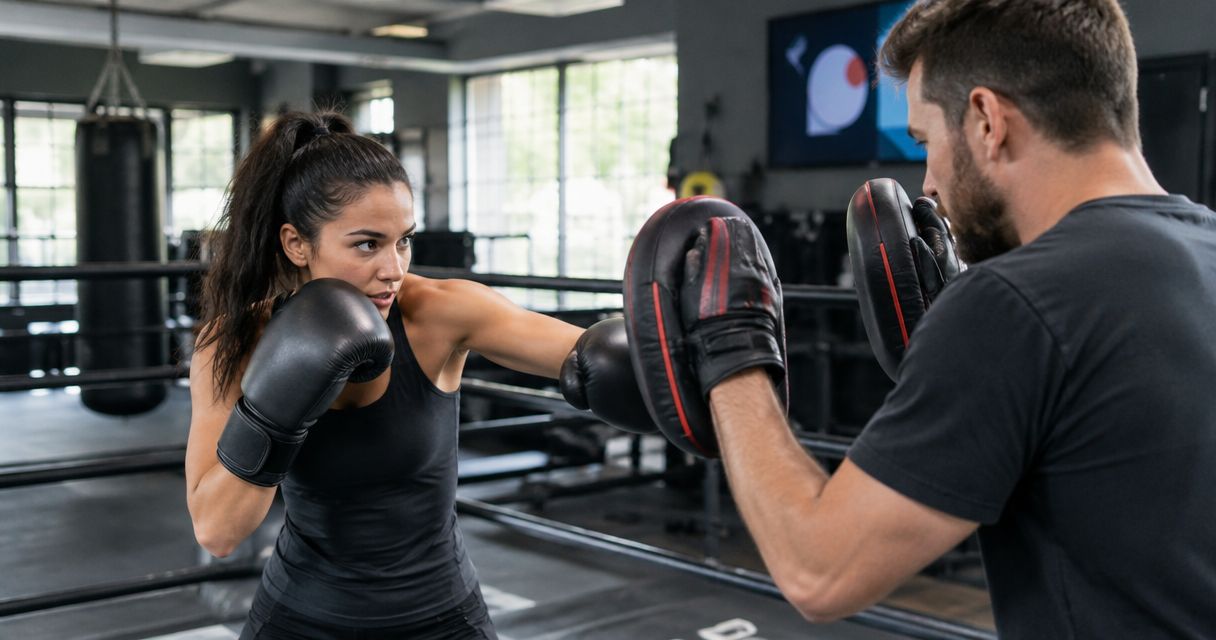
Most coaches clear a beginner for controlled sparring after 20 to 30 private boxing lessons — roughly 3 to 4 months of consistent training in 2026 — not a fixed date circled on a calendar. The lesson count matters less than what you can prove: a guard that stays up when you're tired, footwork that doesn't collapse under pressure, and Core 4 punches thrown with control instead of wild power. A coach who clears you on hours logged instead of skill demonstrated is doing you a disservice.
• Beginners typically need 20 to 30 private boxing lessons, about 3 to 4 months, before controlled sparring in 2026. • Skill gates matter more than lesson count: stance, guard, footwork, and Core 4 punches under fatigue. • Training twice a week compresses the timeline to 3-4 months; once a week stretches it to 6-9 months. • Private coaching builds sparring readiness through mitt work and controlled contact drills before live rounds. • Sparring isn't mandatory to learn real boxing mechanics — plenty of students never spar and still improve.
Why this matters
Rushing into sparring before your defense is real is how beginners get hurt, get discouraged, or pick up bad habits that take years to fix. Group gyms often pair new members up on a set schedule because the class calendar demands it, not because every student is ready. Private coaching flips that. A coach working 1-on-1 with you sets the pace based on what you show in mitt work, not what week it is. That's the real answer to "how many boxing lessons before sparring" — it's a readiness question, not a countdown.
How many boxing lessons before you can spar?
Most private coaches move beginners through four phases before allowing any live contact. Skipping a phase to "speed things up" is the single most common reason beginners get overwhelmed the first time gloves actually touch. That range lands most beginners at 20 to 30 lessons before a coach signs off on sparring in 2026, assuming steady attendance and no gaps of more than a week or two between sessions.
Training once a week: 6 to 9 months before sparring
One lesson a week means skills between sessions decay before they're reinforced, so a coach has to spend part of each lesson re-establishing the last one instead of building on it. That stretches the same 20-to-30-lesson curriculum across 6 to 9 months on the calendar. Verdict: workable but slow — fine for someone training for general fitness or stress relief, frustrating for anyone eager to spar this year.
Training twice a week: 3 to 4 months before sparring
Two sessions a week keeps muscle memory fresh enough that each lesson builds directly on the last one instead of re-teaching stance and guard from scratch. That's the pace that gets most students through the 20-to-30-lesson curriculum in 3 to 4 months. Verdict: the practical minimum for anyone who wants controlled sparring on a realistic 2026 timeline without shortcuts. “You don't earn sparring by counting lessons — you earn it by keeping your guard up when you're tired.”
Why the sparring timeline varies
The 20-to-30-lesson range is a starting point, not a guarantee. A handful of factors push individual students faster or slower than average: • Prior combat sports background — wrestlers, martial artists, and former athletes often need fewer lessons to build defensive reflexes. • Reaction time and coordination — some students pick up slipping and footwork faster than others regardless of effort. • Coach's contact philosophy — some coaches use controlled mitt sparring earlier; others hold off until full combinations are automatic. • Consistency between lessons — skipping weeks resets progress more than it delays it. • Private vs. group pacing — private lessons move at your speed; group classes move at the slowest student's speed. • Age and conditioning level — cardio and balance under fatigue affect how quickly defense holds up in live rounds. Build toward sparring the right way Live 1-on-1 boxing lessons with Coach Chris Persaud, virtual or in-person in 2026.
What do you need before your first sparring session?
Before any live sparring, you need a guard you can hold for a full round without dropping your hands, footwork that keeps you off the centerline, and enough conditioning to defend correctly in round three, not just round one. Headgear and properly fitted gloves are non-negotiable, and most coaches also want to see you take controlled mitt combinations without flinching or over-committing to power shots.
Is sparring necessary to learn to box?
No — sparring is not required to learn real boxing mechanics, and many students train for months or years without ever stepping into live rounds. Mitt work, defensive drills, and shadowboxing under a coach's eye build the same stance, footwork, and Core 4 punch mechanics that sparring tests, just without the contact risk.
How long does it take to learn to box overall?
Learning solid boxing fundamentals takes longer than reaching sparring-ready status, since fundamentals keep sharpening well past your first live round. For the full breakdown by skill milestone, see how long it takes to learn to box.
FAQ
How many boxing lessons before you can spar? Most beginners need 20 to 30 private boxing lessons, about 3 to 4 months at twice-weekly training, before a coach clears them for controlled sparring in 2026. The exact number depends on how quickly your guard and footwork hold up under fatigue, not the calendar. Can beginners spar after one month of boxing? Rarely — one month at typical frequency covers only the foundation phase (stance, guard, basic footwork), well before the combination and controlled-contact work most coaches require. Sparring that early usually means bad habits, not real readiness. Does private coaching get you to sparring faster than a group class? Yes, private coaching typically moves faster because every minute of the lesson targets your specific gaps instead of the group's average pace. A coach working 1-on-1 can also spot readiness sooner because they see every rep. What skills do coaches check before allowing sparring? Coaches check that your guard stays up under fatigue, your footwork keeps you off the centerline, and your Core 4 punches land with control rather than wild power. Reaction drills and mitt work under pressure are the usual test before live rounds. Is it normal to never spar and still learn boxing? Yes, it's normal — plenty of students train for fitness, conditioning, or technique for years without ever sparring live. Mitt work and defensive drills build the same mechanics sparring tests, just without the contact. How often should you train before your first sparring session? Twice a week is the practical minimum for steady progress toward sparring, typically reaching readiness in 3 to 4 months. Once-a-week training works but usually takes 6 to 9 months to reach the same point. What gear do you need before sparring? You need properly fitted headgear and gloves rated for sparring, not just bag gloves, before any live contact. A coach will usually specify exact gear requirements once you're near sparring-ready.
One last thing
The students who reach sparring readiness fastest in 2026 aren't the most athletic ones in the room — they're the ones who show up twice a week without gaps and actually fix what the coach corrects instead of repeating the same error for a month. Consistency beats talent on this specific timeline every time.
Train with Coach Chris
Ready to put this into practice with a coach watching every rep? Better Through Boxing is private, 1-on-1 coaching with Christopher Persaud — CoachUp's #1 ranked NJ trainer. Train live online over Zoom from anywhere in the world, or work the mitts in person across New Jersey. Book a session at betterthroughboxing.com and get real-time corrections on your stance, footwork, and punches.
Train anywhere with the Ronin Box app
Voice-cued boxing workouts, round timer, and progress tracking — coached by Chris, right in your pocket.

Scan to install