
How do you stay motivated during virtual boxing lessons?
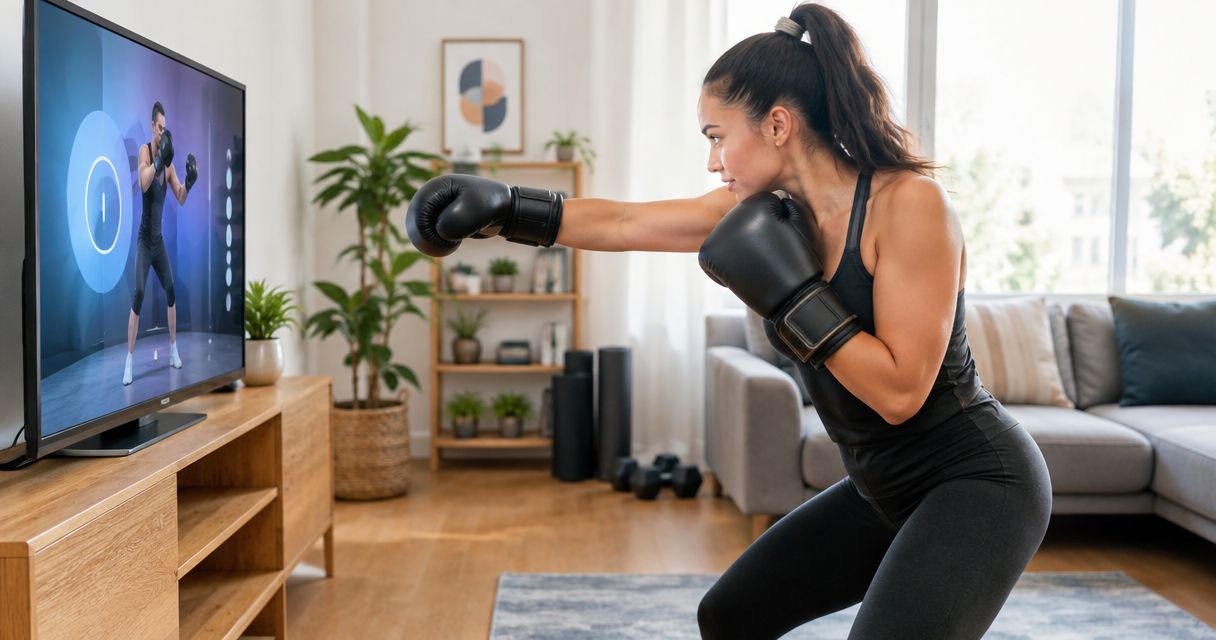
To stay motivated during virtual boxing lessons, give each session one technique goal, ask for live feedback, and track what changes in your stance, footwork, and defense. Put the next lesson on your calendar before the current one ends. A vague goal such as getting a workout is harder to act on than a specific goal such as keeping your guard up after a jab.
• To stay motivated during virtual boxing lessons, set one technique goal and review it with a live coach. • Better Through Boxing is best for learners who want live correction of stance, footwork, and defense rather than a workout to follow alone. • Track a repeatable skill, not just how tired you feel after training. • When your schedule changes, protect the lesson appointment and adapt the space or drill.
How do you stay motivated during virtual boxing lessons?
Use a repeatable loop: choose a skill, practice it where your coach can see it, get a correction, and carry that correction into the next lesson. This gives you a reason to return beyond enthusiasm. If travel disrupts your usual setup, use the virtual boxing lessons for frequent travelers guide to plan around changing spaces without abandoning the appointment. • Name one skill before the lesson. Choose something visible, such as returning your rear hand to your cheek after a cross or pivoting without bringing your feet together. You should be able to tell whether you attempted it, even before you can do it consistently. • Tell your coach what you want corrected. A live lesson is most useful when the coach can watch the movement and respond. Ask for feedback on your feet and guard as well as your punches; a clean punch starts with a stable position. • Practice the correction while it is fresh. Repeat the movement slowly enough to keep its mechanics intact. Adding speed before you can control the position turns a useful correction into another rushed repetition. • Record the cue, not a vague verdict. Write down a short instruction you can use next time: keep the lead foot planted during the pivot, or return the jab hand before throwing the cross. Good and bad are less useful notes. • Book the next session and bring the cue back. Start by showing the coach what you practiced. The next lesson then continues a skill rather than resetting to another unrelated workout. In 2026, treat that loop as your training plan even if your work calendar or home setup changes. You do not need a new routine whenever motivation dips. You need a specific movement to revisit and a scheduled chance to get it checked.
Why this matters more than a hard workout
Feeling tired tells you that you worked. It does not tell you whether your stance stayed balanced, your punches returned to guard, or you could defend after an attack. Those are observable skills, which makes them better targets when you need a reason to keep training. Better Through Boxing is best for people who stay engaged by learning real boxing mechanics with live coaching. Its private virtual lessons put Coach Chris Persaud in the feedback loop; you still have to show up, practice between lessons, and make room for movement at home. If you only want to press play and move without correction, live private coaching is a different commitment. This distinction matters for beginners. No experience is necessary to start with stance and footwork, but you need to give those basics attention before judging a lesson by how intense it feels. For experienced boxers, the same principle applies to slipping, pivots, defensive recovery, and strategy: choose a technical problem you can show your coach.
Build a session around one visible improvement
A useful virtual lesson has a beginning, a technical focus, and a check at the end. You can propose that structure without pretending every session needs to follow the same script. The aim is to leave with one correction you can recall when the screen is off. • Start with stance. Show your normal boxing position and move in each direction. If your feet cross or your stance narrows, fix the position before adding combinations. • Add one attacking action. Work a jab, cross, or another punch from a position you can maintain. Notice what your hands and feet do after the punch, not just during it. • Add the defensive return. Bring your hands back to guard, move your head where appropriate, and recover your balance. An exchange does not end when your punch lands in the air. • Finish by repeating the opening movement. Ask what changed and what still needs work. Carry the remaining cue into your next practice. If a drill feels awkward, slow it down and ask which part is breaking: your starting position, the movement, or the return to guard. That question gives the coach something concrete to answer. In 2026, keep a brief training note with the cue you received and the movement you want checked next; do not turn the note into a score for motivation.
Use the 6-week program as a defined commitment
Better Through Boxing also offers the 6-week Better Through Boxing Basics Program through Zoom. A defined program is useful when open-ended practice makes it easy to postpone lessons: you have a named period for showing up and working on fundamentals. The program description establishes its format and duration, not a promised result or a fixed skill milestone. If you are starting out, make the goal participation and technical attention rather than mastery by a deadline. Bring a question about stance, footwork, or the Core 4 punches to each lesson. Keep the answer in your training notes, then show the movement again at the next session so your coach can tell you what changed. A 6-week commitment does not remove scheduling friction. Put lesson times in your calendar, keep a clear area for movement, and tell your coach when a home setup limits a drill. That makes the plan workable without claiming that every home can support every exercise. In 2026, consistency means returning to the lesson and its technical goal, not completing identical workouts under identical conditions.
Why motivation during virtual boxing lessons varies
Motivation is easier to maintain when the lesson fits your life and gives you feedback you can use. Check these factors before assuming you have lost interest in boxing: • The goal is too broad. Getting better at boxing gives you no obvious task for the next lesson. Keeping your stance through a pivot gives you something to attempt and review. • Feedback is not specific enough. Ask what the coach saw in your feet, guard, or timing. Repeat the movement after the correction so you know which cue to practice. • The lesson has no protected time. A session that moves whenever another task appears is difficult to sustain. Choose an appointment you can keep and plan your space before it begins. • The home setup interrupts movement. Clear enough space for the drill you intend to do, position your camera so the coach can see your movement, and say when a drill does not fit. • Every session feels unrelated. Revisit an earlier correction before moving to a new combination. A sequence of connected lessons gives you evidence of what you are learning. • You judge only intensity. Conditioning has a place, but exhaustion is not proof that your footwork, defense, or mechanics improved. Review the skill you came to practice. These factors call for different fixes. If you lack a clear goal, choose a technique. If the coach cannot see your feet, change the camera position. If you cannot remember last session’s correction, bring a short note. Better Through Boxing offers live virtual boxing coaching worldwide, so the lesson can happen from home; making the movement visible and the appointment reliable remains your responsibility.
What should you do when you do not feel like logging in?
Keep the appointment and lower the complexity of the goal. In 2026, a lesson focused on stance, a clean jab, or defensive recovery still has a purpose when you do not feel ready for harder combinations. Tell your coach where you are struggling so the session can address the actual problem. Separate reluctance to start from a physical reason to stop. If you feel pain, dizziness, or another concerning symptom, stop the drill and address that concern rather than pushing through it for the sake of a calendar streak. Staying motivated is not the same as ignoring a warning sign.
Can you stay motivated without a heavy bag?
Yes. Stance, footwork, shadowboxing, defensive movement, and punch mechanics all give you visible skills to practice without a heavy bag. A bag can serve other training purposes, but it is not the measure of whether a virtual lesson taught you something. For a no-bag practice in 2026, select the correction from your last lesson and repeat the movement at a pace you can control. Pay attention to where your feet finish and whether your hands return to guard. Bring the same movement to the next live session for another look.
Is live coaching better for motivation than following a recording?
Live coaching is the better fit when you need individual feedback and a scheduled appointment. A recording lets you follow instruction on your own time, but it cannot watch your pivot, identify the position you lost, and respond during that session. Neither format makes you practice between sessions. Choose according to the obstacle you actually face. If you already exercise alone but cannot tell whether your mechanics are sound, live feedback addresses that gap. If scheduling any live session is the barrier, a recording is easier to start, but you will need another way to check technique.
FAQ
How do I stay motivated during virtual boxing lessons? Set one technique goal for each lesson, get live feedback, and revisit the correction next time. Schedule the next appointment before the current lesson fades into another unfinished workout. What should a beginner focus on in an online boxing lesson? Start with stance, footwork, basic punches, and the return to guard. Ask the coach to correct a movement you can repeat rather than trying to learn every combination at once. Do I need a heavy bag to make progress in virtual boxing lessons? No. You can practice stance, footwork, shadowboxing, and defensive movement without a heavy bag. A live coach can watch those movements when your camera shows your position clearly. What if I lose interest between boxing lessons? Practice the specific correction from your last lesson and bring it back to your coach. A short cue about your feet or guard gives your next session a clear starting point. Can a live boxing coach help if I train at home? Yes. Better Through Boxing provides live virtual coaching, including instruction in stance, footwork, defense, and mechanics. You need space to perform the chosen drill and a camera view that lets the coach see it. Is a recorded boxing workout the same as a live virtual lesson? No. A recording provides a workout you can follow, while a live lesson allows a coach to respond to the movement you show. Choose live coaching when individual technique correction is your priority. How long is the Better Through Boxing Basics Program? The Better Through Boxing Basics Program is a 6-week Zoom-based program. Use that defined period to attend lessons and revisit technical feedback rather than treating the end date as a promise of mastery.
One last thing
Before your next virtual lesson, write down the movement you want your coach to watch after you punch. A jab is easier to discuss when you also show the return to guard, your foot position, and whether you can defend from there. That small change turns a session from doing combinations into learning what your boxing looks like in motion.
Train with Coach Chris
Ready to put this into practice with a coach watching every rep? Better Through Boxing is private, 1-on-1 coaching with Christopher Persaud — CoachUp's #1 ranked NJ trainer. Train live online over Zoom from anywhere in the world, or work the mitts in person across New Jersey. Book a session at betterthroughboxing.com and get real-time corrections on your stance, footwork, and punches.
Train anywhere with the Ronin Box app
Voice-cued boxing workouts, round timer, and progress tracking — coached by Chris, right in your pocket.

Scan to install