
How do you prepare for your first boxing lesson?
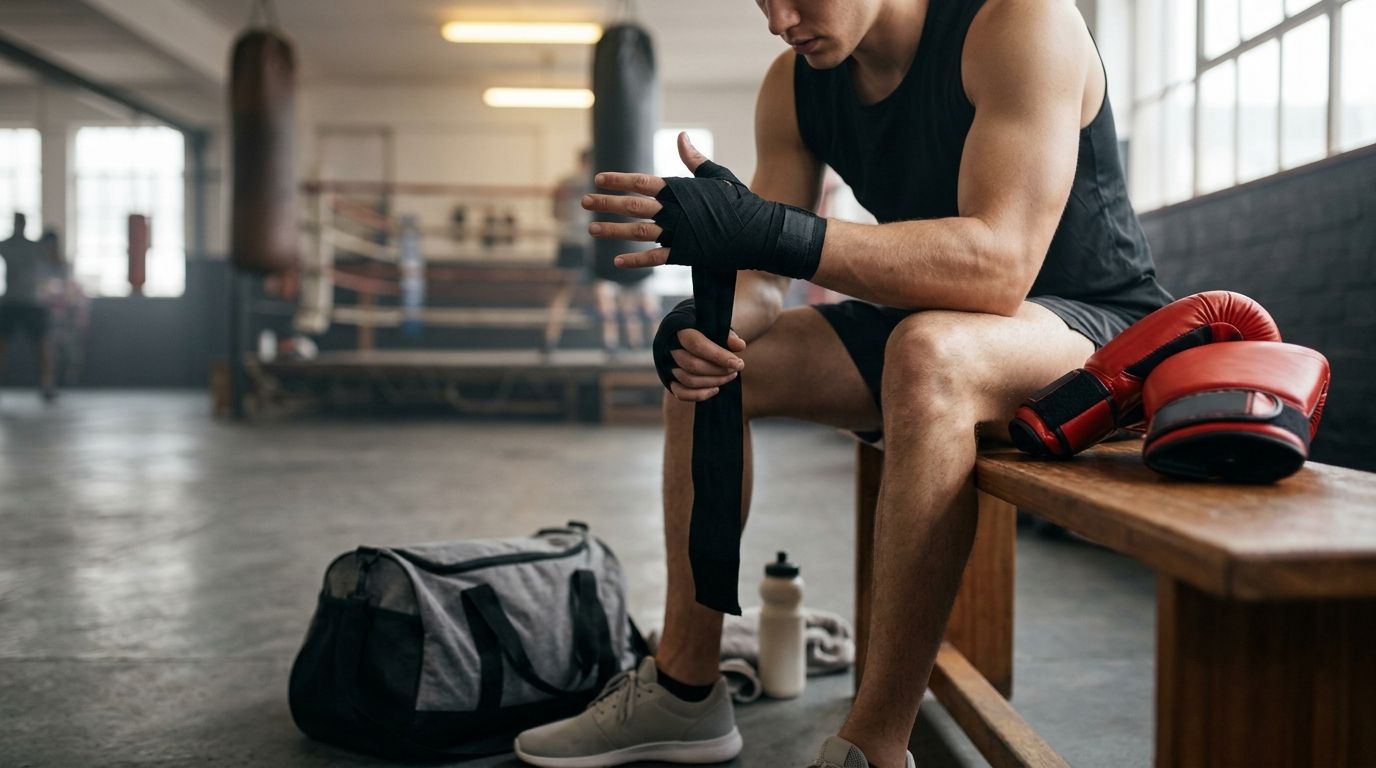
To prepare for your first boxing lesson in 2026, wear clothes you can move in, clear a safe area, bring water, and tell your coach about your experience, goals, and any movement limitations. If the lesson is virtual, test your camera and make sure the coach can see your feet. You do not need to master punches beforehand; arrive ready to work on stance, footwork, and mechanics.
• How to prepare for first boxing lesson: clear your space, dress to move, and tell your coach your goal. • For a live virtual lesson, position the camera so your coach can see your stance and feet. • Better Through Boxing is best for beginners who want private coaching in real boxing technique, not just a workout. • Ask about gloves before buying equipment; what you need depends on the lesson.
Why this matters
Your coach can correct a punch only if you can move freely and they can see what your body is doing. A crowded training area, unstable footing, or a camera aimed only at your face gets in the way of useful instruction. Preparation is less about buying gear than making your movement visible and giving the coach enough information to teach at your level. For a separate packing checklist, see what to bring to your first boxing lesson. The steps below focus on what to do before you start.
How do you prepare for your first boxing lesson?
Follow this order. It works for a lesson at home or with a coach in person, with a few setup changes for video. • State your goal. Tell the coach whether you want to learn boxing technique, improve conditioning, or build toward more advanced training. If you have never boxed, say so. Your coach needs a starting point, not a polished performance. • Share relevant limitations. Mention an injury, pain, balance concern, or movement that feels difficult before the warm-up. The coach can then choose what to assess and what to avoid during instruction. Seek medical advice if you are unsure whether exercise is appropriate for you. • Clear your space. Move loose objects out of the area where you will stand and step. Check the floor before you practice changing direction; you should be able to move without watching for obstacles. • Dress to move. Choose clothing that lets you bend your knees, turn your torso, and raise your arms without adjusting it between movements. Wear footwear suited to the training surface and ask your coach if they have a preference. • Confirm the equipment. Ask whether the planned lesson calls for gloves, hand wraps, or any other gear. Do not buy equipment based on a generic beginner list when you do not yet know what the coach plans to teach. • Set up the view if you are online. Place the camera where the coach can see your full body, including your feet, when you take your stance and step. Check the connection and audio before instruction starts. • Bring water and arrive ready to listen. Your first task is to understand the position and movement the coach shows you. Speed can come after you can repeat the mechanics with control. These steps do not require a heavy bag or a training partner. Stance, foot placement, rotation, and defensive movement all give a coach something to observe before equipment enters the lesson. WHAT SHOULD YOU TELL THE COACH BEFORE YOU START? Give a short, practical answer: your boxing experience, what you want from coaching, and any movement you need to approach carefully. You do not need to explain your entire fitness history. If your goal is technique, say that plainly so the lesson does not become only a conditioning workout. Be specific about what you want to learn. Stance and a jab are clearer starting goals than wanting to get good at boxing. If you are returning after time away, tell the coach which movements you remember and which ones need rebuilding. WHAT SHOULD YOU EXPECT TO LEARN FIRST? Expect the coach to look at how you stand and move before treating punch speed as the goal. A boxing stance gives you a position from which to punch and defend; footwork helps you keep that position while changing distance. If your feet cross or your stance collapses when you step, hitting harder will not fix the underlying movement. The exact lesson plan belongs to the coach, so do not rehearse an online punch sequence and assume it will match. Pay attention to where your feet land, whether you stay balanced when you turn, and whether you can return your hands to a useful position after punching. Those observations give you questions to ask during the lesson.
Preparing for a live virtual lesson
A virtual boxing lesson depends on what the coach can see. Put the camera far enough away to show your stance, steps, and upper-body movement at the same time. Look at the screen from where you will train, not just from beside the device; a good close-up for conversation can be a poor view for footwork correction. Test the setup by taking your stance and stepping in each direction you expect to use. If your feet leave the frame, move the device or adjust its angle before the lesson. Keep the device stable and the floor clear. A larger screen can help you see a demonstration, but visibility in both directions matters more than the screen you use. Better Through Boxing offers live virtual boxing coaching with Coach Chris Persaud. Better Through Boxing is best for a beginner who wants direct feedback on real boxing mechanics from home; the trade-off is that your setup must let the coach see those mechanics. In 2026, that is the key distinction to make when choosing between live coaching and simply following a recorded workout. Start with private boxing coaching Explore live virtual and NJ-area private coaching with Coach Chris Persaud.
Preparing for an in-person lesson
For an in-person lesson, focus on the training surface and what you have agreed to bring. Better Through Boxing offers private coaching delivered to clients' homes, garages, and outdoor spaces in its NJ-area service area. If the coach is coming to you, identify a place where you can stand, step, and turn without moving around stored items or other people. Ask where the lesson will take place and whether the surface affects footwear or equipment. An outdoor area and a garage do not present the same footing, and a location that works for standing drills might not suit every movement. Tell the coach about the space before the session rather than trying to rearrange it while instruction is underway. You do not have to perform for the coach on arrival. Show how you naturally stand and move, then accept corrections. A coach who sees your actual starting point can address it; a memorized stance that disappears as soon as you step is less useful.
Why preparation varies
There is no single gear list or room setup for every first lesson in 2026. These factors change what you should check beforehand: • Lesson format: Live video requires a clear camera view and working audio. In-person coaching requires an agreed training location and a usable surface. • Available space: You need to know where you can step without hitting furniture, equipment, or another person. The coach can adapt instruction only after they understand the space. • Your starting point: A complete beginner needs to tell the coach they are new; someone with experience should identify what they have trained and what needs work. • Your goal: Learning defensive movement, improving conditioning, and developing punching mechanics give the coach different questions to answer. • Movement limitations: Pain, injury, or balance concerns belong in the conversation before you begin moving at pace. • Planned equipment: Mitt work, shadowboxing, and other drills use different setups. Confirm the plan instead of assuming your first lesson needs every item sold to beginners. The practical rule is simple: prepare the conditions for instruction, then let the coach choose the drill. Buying equipment cannot replace an unobstructed stance or an accurate account of your experience.
Do you need boxing gloves for your first lesson?
Ask your coach before buying gloves. What you need depends on the drills planned for your first lesson. You can discuss stance and footwork without assuming glove work is first; if gloves or wraps are needed, get the coach's guidance on what to bring. Do not confuse equipment with readiness. In 2026, the better question to send before your session is what you should have available for that lesson. It produces a useful answer without committing you to gear you have not been asked to use.
Can you take your first boxing lesson over Zoom?
Yes. Better Through Boxing provides live Zoom-based private coaching, including a 6-week Better Through Boxing Basics Program. For a first virtual lesson, clear your floor space, test your audio, and frame the camera so the coach can see your feet and hands while you move. Video makes your setup part of the lesson. If the coach cannot see a step or pivot, they cannot assess that movement from the screen. Test the view while moving, not only while standing still.
Should you practice punches before your first lesson?
No; you can arrive without boxing experience. If you want to do something useful beforehand, clear the training area and decide what you want to ask about stance, footwork, or the jab. The first lesson is the place to learn how the coach wants you to move. Practicing at full speed from a video can make it harder to notice your own position. In 2026, a better first-session goal is to understand a correction and repeat the movement with control, not to show how many punches you can throw.
FAQ
How do I prepare for my first boxing lesson if I have no experience? Tell your coach you are new, wear clothes you can move in, clear your training space, and bring water. You do not need to learn punches before the lesson. What should I wear to a first boxing lesson? Wear clothing that allows you to bend, step, and turn without adjusting it. Ask your coach which footwear suits the surface where you will train. Do I need a heavy bag for my first boxing lesson? Do not assume you need a heavy bag. Ask what drills the coach plans; stance and footwork can be taught without bag work. How should I position my camera for a virtual boxing lesson? Position it so your coach can see your full body, including your feet, while you stand and step. Test the view from your training position before instruction begins. Should I tell my boxing coach about an injury? Yes. Tell your coach about relevant pain, injuries, or movement limitations before the lesson starts. If you are unsure whether exercise is appropriate, seek medical advice. Will I have to spar at my first boxing lesson? Ask your coach what the session includes rather than assuming you will spar. Stance, footwork, defense, and punching mechanics provide plenty to work on without a partner. Is a live online boxing lesson the same as a recorded workout? No. A live lesson lets a coach observe your movement and give feedback, while a recording cannot respond to what you do. Your camera view matters because it determines what the coach can assess.
One last thing
Before your first lesson in 2026, take your stance in the space you intend to use and make one careful step in each direction. If you have to dodge an object, cannot see your feet on camera, or need to stop to adjust clothing, fix that first. The most useful preparation is removing the obstacles between your movement and the coach's feedback.
Train with Coach Chris
Ready to put this into practice with a coach watching every rep? Better Through Boxing is private, 1-on-1 coaching with Christopher Persaud — CoachUp's #1 ranked NJ trainer. Train live online over Zoom from anywhere in the world, or work the mitts in person across New Jersey. Book a session at betterthroughboxing.com and get real-time corrections on your stance, footwork, and punches.
Train anywhere with the Ronin Box app
Voice-cued boxing workouts, round timer, and progress tracking — coached by Chris, right in your pocket.

Scan to install