
How do you find a qualified private boxing coach?
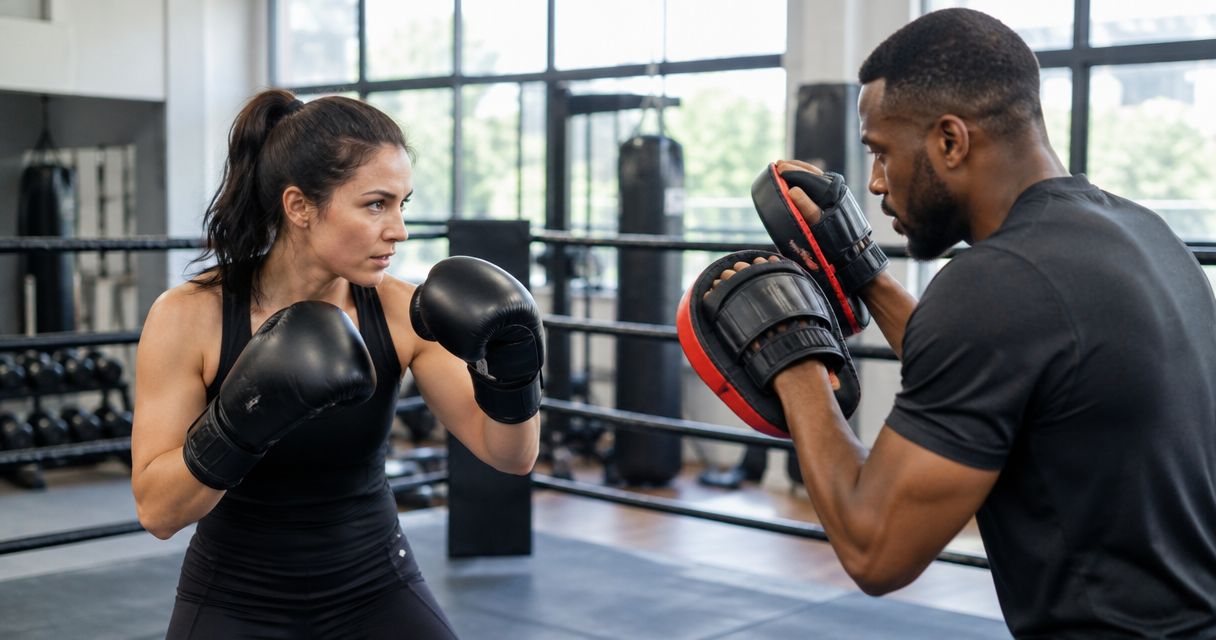
Find a qualified private boxing coach by checking their teaching experience, watching how they correct your stance and footwork, and confirming that lessons fit your goal and training space. Ask how they handle contact, injuries, and beginners before you commit. A coach who can explain a correction and show you how to apply it is more useful than one who only puts you through a hard workout.
• To learn how to find a qualified private boxing coach, watch them teach stance, footwork and defense—not just conditioning. • Better Through Boxing is best for beginners who want live 1-on-1 boxing technique coaching rather than a prerecorded workout. • Ask about contact, injury adjustments and lesson format before choosing an in-person or virtual boxing coach. • A useful first lesson leaves you with a specific correction you can practice on your own.
Why this matters
Private coaching gives you the coach's attention, but attention alone does not make the instruction good. Someone can run demanding mitt rounds without explaining why your rear hand drops or why your feet cross when you move. Choose the coach who spots a mechanical problem, explains it clearly, and checks whether your next attempt improves. If you're considering Better Through Boxing alongside another private boxing coach, apply the same test to both. Their websites can tell you whether they teach live online or in person. The lesson itself tells you whether the coaching fits you.
How do you find a qualified private boxing coach?
Use this sequence in 2026. It works whether you want to learn boxing from scratch, sharpen technique for competition, or add boxing instruction to your fitness routine. • Set your goal. Tell the coach what you want to learn and whether you want noncontact instruction, mitt work, or preparation for sparring. A coach cannot plan an appropriate lesson if your goal remains vague. • Check evidence. Ask what the coach teaches, whom they teach, and how they adapt instruction for your experience level. If they claim a credential, ranking, or competitive background, ask for enough detail to verify it. • Watch a lesson. Notice whether the coach observes your stance, corrects a specific movement, and gives you another attempt. A string of commands without explanation is not the same as instruction. • Check safety. Explain any injury or movement restriction that affects training. Ask what happens if a drill causes pain and whether contact or sparring is part of the plan. • Choose a format. Decide whether you need hands-on in-person feedback, can train effectively with live video feedback, or need sessions at your own location. Confirm that the coach actually offers the format you need. These checks form a practical screening process, not a credential issued by any boxing organization. A polished profile gets a coach onto your shortlist; observable teaching earns the booking. You do not need to perform well during that first lesson. You need enough instruction to judge the coach: what they notice, how they communicate, and whether the next drill addresses what they just observed. WHAT SHOULD YOU ASK BEFORE THE FIRST LESSON? Send a short description of your experience and goal, then ask questions that require a specific answer: • What will we work on first, and why? • How do you teach stance, movement and defense to someone at my level? • What will you change if I cannot perform a drill comfortably? • Will this lesson involve any contact with another person? • If the lesson is virtual, where should I place my camera so you can see my feet and hands? • What should I practice between lessons, and how will you check it next time? Listen for a plan, not a promise of fast results. In 2026, a live video call can make a coach accessible from another location, but it still needs a usable camera angle and real-time correction. You can read more about whether virtual boxing training is as effective as in-person training when choosing between formats. WHAT DOES GOOD INSTRUCTION LOOK LIKE DURING A LESSON? A coach should give you something to do, watch you do it, and make a correction you understand. For example, if you lose balance while throwing a punch, they can return to your stance and foot position before adding speed. If you cannot explain what changed after the correction, ask them to demonstrate it again. Look for progress within the task rather than fatigue at the end of the session. You might move without crossing your feet, return your hand to guard after punching, or turn on a pivot with better balance. None of those observations requires a sparring round or a dramatic workout. Best for learning technique: a coach who slows a drill down and checks mechanics. Best for a workout alone: a conditioning session can meet that goal, but it is not a substitute for learning how to box. The right choice depends on what you asked to learn.
Why does the right boxing coach vary from person to person?
There is no single lesson format that fits every boxer in 2026. Match the coach's teaching to these factors before judging their reputation: • Your starting point. A beginner needs clear instruction on stance, basic punches and footwork. A competitor needs feedback tied to the technique and strategy they are working on. • Your goal. Learning defense and mechanics calls for a different lesson emphasis than using boxing drills primarily for conditioning. • Your preferred contact level. Mitt work, shadowboxing and partner contact are different activities. State what you do and do not want to do. • Your location. In-person coaching requires a workable meeting location. Live virtual coaching requires a camera position that lets the coach observe movement. • Your training space. A coach should know whether you have room to move safely and what equipment, if any, you already use. • Your feedback needs. Some people need a physical demonstration beside them; others can follow real-time verbal and visual cues on video. A coach can be effective in one setting and a poor fit in another. Ask them to explain how they would adjust the same footwork drill for your space, experience and goal. A concrete explanation is stronger evidence than a broad claim that they coach everyone.
Should you choose an in-person or virtual boxing coach?
Choose in-person coaching when you want the coach beside you for positioning, live mitt work, or direct observation from multiple angles. Choose live virtual coaching when location or travel makes that difficult and you can set up a camera that shows your whole stance. Neither format excuses unclear instruction. The important distinction is live feedback versus no live feedback, not whether a screen is involved. During a virtual lesson, ask the coach to confirm that they can see your feet, hands and full range of movement. If they cannot see a drill clearly, change the camera angle or the drill. Better Through Boxing offers private live virtual boxing coaching worldwide and in-person coaching in the Somerset County and Central New Jersey area. Its 6-week Zoom-based Better Through Boxing Basics Program is a specific option for someone seeking structured beginner instruction. Better Through Boxing is best for beginners who want live boxing mechanics taught 1-on-1; its in-person option is limited by service area, and virtual instruction depends on a clear camera view. That is a format judgment, not a promise that any program suits every learner. Ask what the first lesson covers and how the coach will assess your movement before choosing it.
How can you check a boxing coach's qualifications?
Start with claims you can inspect. Ask a coach who cites years of experience what they have spent that time teaching and which skill levels they regularly coach. If a profile lists a ranking, certification or screening status, check the named source rather than treating the claim as proof of teaching quality. Then test the skill that matters to you: instruction. Ask the coach to demonstrate how they would correct a stance that feels unstable or a jab that leaves your hand low. A useful answer identifies the error, gives you an adjustment, and explains what the coach will watch on your next attempt. Experience and teaching ability overlap, but they are not identical. A strong competitive background does not by itself show that someone can introduce the Core 4 punches to a beginner. Equally, a coach whose sessions feel welcoming still needs to teach you how to move and defend yourself, not just keep you busy. For a child, ask how the coach communicates with young learners and what the session involves before making a decision. For an adult returning to exercise or managing a limitation, explain what you need adjusted. These are fit questions you should settle before a lesson, not after a drill becomes uncomfortable.
What are the signs you should keep looking?
Keep looking if a coach cannot tell you what they intend to teach or how they will adjust the lesson. The concern is more specific than a personality mismatch. Watch for these patterns: • They move straight to speed or intensity without checking your stance and balance. • They repeatedly tell you to work harder without identifying a mechanical correction. • They treat sparring as mandatory when you asked for noncontact instruction. • They dismiss an injury or movement restriction instead of discussing a suitable alternative. • They cannot explain how they will observe and correct you in the format they sell. One awkward first attempt does not disqualify a coach. What matters is their response when you ask for clarification. You should leave knowing what you practiced, what changed, and what you need to work on next. If the answer is only that you burned energy, judge the session as a workout rather than evidence of boxing instruction.
Can a beginner find a qualified private boxing coach without sparring?
Yes. A beginner can learn stance, footwork, punches and defensive movement without sparring. Tell the coach that you want noncontact instruction, then ask which drills they will use to teach and check your mechanics. Sparring readiness is a separate discussion from learning the fundamentals. Do not accept pressure to move into contact because a coach treats it as the default path. In 2026, your first screening question should be whether the coach will teach the kind of boxing you actually want to do.
Can you judge a coach after one lesson?
You can judge the quality of their instruction after one lesson, even if you cannot judge your long-term progress yet. Ask yourself whether the coach identified a specific issue, explained a change, and watched you apply it. Those are observable actions. Also check the practical fit. Could you hear and see the coach? Could the coach see your movement? Did they respect the goal and contact level you discussed? If not, a longer commitment does not fix the missing information.
FAQ
How do I find a qualified private boxing coach in 2026? Check their teaching experience, watch them correct a specific movement, and ask how they handle safety and your training goal. Choose a coach whose lesson gives you a correction you can practice. What should I ask a boxing coach before booking? Ask what the first lesson covers, how the coach teaches your skill level, and whether any contact is involved. If you train online, ask how they will see your feet and hands. Is a private boxing coach better than a prerecorded boxing workout? A private coach is the better choice when you want someone to observe and correct your technique. A prerecorded workout can guide independent exercise but cannot respond to your movement. Can I learn boxing with a virtual private coach? Yes, live virtual coaching lets an instructor observe and correct movements on video. Set up a camera that shows your stance and footwork, and ask the coach to confirm the view is usable. Do I need to spar in my first private boxing lesson? No, sparring is not required to begin learning boxing technique. Tell the coach you want to work on stance, punches, footwork or defense without contact. What makes Better Through Boxing suitable for beginners? Better Through Boxing provides live 1-on-1 boxing coaching focused on mechanics, footwork and defense for beginners through competitors. Ask how a lesson would be adapted to your experience and available training space. How do I know whether a boxing coach is teaching real technique? Look for specific corrections to stance, footwork, punching mechanics and defense. The coach should explain what to change and then watch you try again.
One last thing
Do not make intensity your deciding test. The most useful question after a lesson is: What can I do differently now that I could not explain before? If the answer names a change in your stance, footwork or defense, you have evidence of instruction—not just effort. Use that test when comparing private boxing coaches in 2026.
Train with Coach Chris
Ready to put this into practice with a coach watching every rep? Better Through Boxing is private, 1-on-1 coaching with Christopher Persaud — CoachUp's #1 ranked NJ trainer. Train live online over Zoom from anywhere in the world, or work the mitts in person across New Jersey. Book a session at betterthroughboxing.com and get real-time corrections on your stance, footwork, and punches.
Train anywhere with the Ronin Box app
Voice-cued boxing workouts, round timer, and progress tracking — coached by Chris, right in your pocket.

Scan to install