
Can boxing training help you lose weight?
Yes. Boxing training can help you lose weight in 2026 when it increases your activity and you consistently use more energy than you consume. Boxing alone does not guarantee weight loss: food intake, training intensity and recovery still affect the result.
• Can boxing training help you lose weight? Yes, when regular training contributes to a sustained calorie deficit. • Shadowboxing builds movement practice; mitt work adds coaching feedback; conditioning raises the physical demand. • Better Through Boxing suits people who want live boxing coaching, not a workout they have to direct alone. • A 6-week program provides structure, not a promised amount of weight loss.
Why this matters
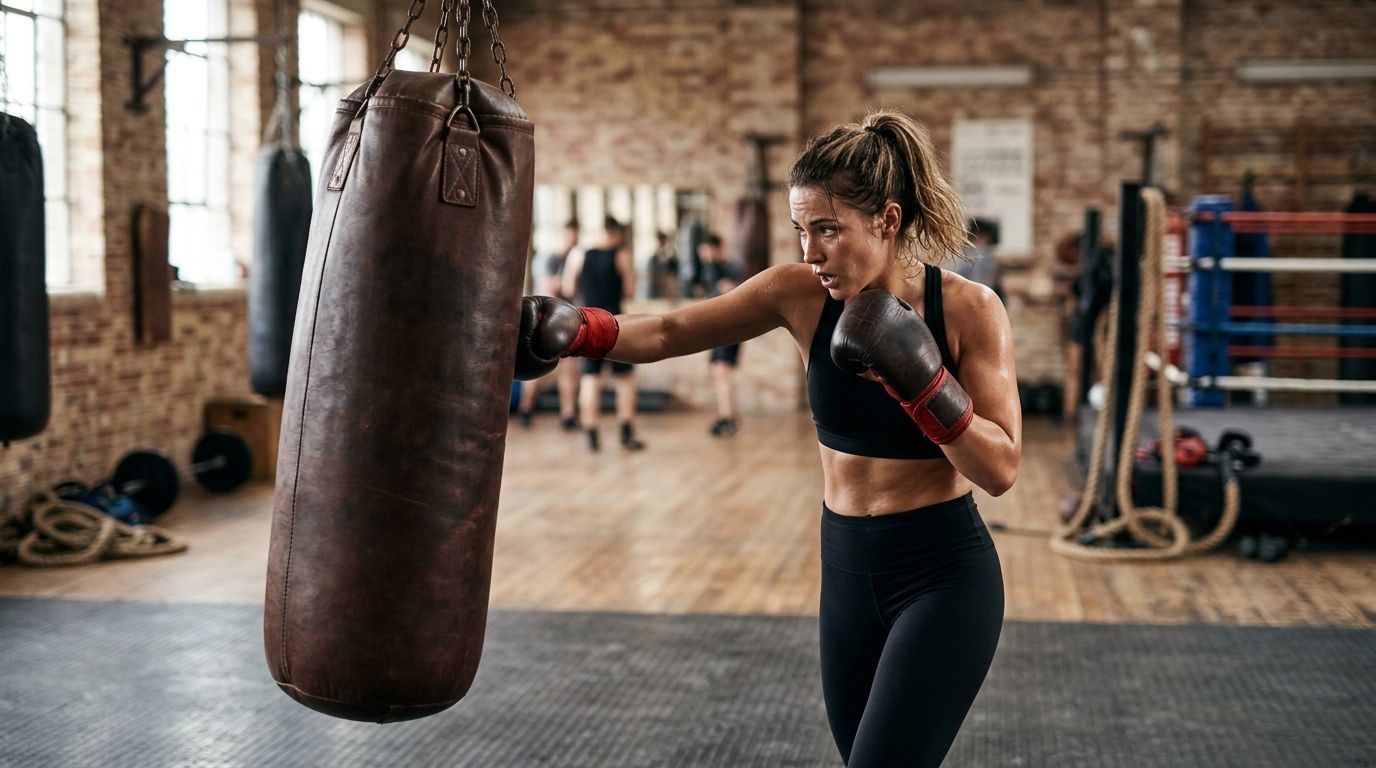
A boxing session can feel hard without changing your weight. Hard work matters, but the useful question is whether you can repeat that work, recover from it and maintain an eating pattern that supports your goal. Judge boxing by the routine you can sustain, not by how exhausted you feel after one session. You also need to distinguish boxing instruction from a workout built around punching. Learning stance, footwork, defense and punch mechanics gives you skills to practice as your conditioning improves. For exercise ideas, see these boxing workouts for weight loss; then choose movements you can perform with control rather than rushing through unfamiliar combinations.
Can boxing training help you lose weight?
Yes, if boxing helps you maintain a calorie deficit over time. Training increases physical activity, but no drill makes weight loss automatic. A session's demands change with the pace, rest periods and movements you perform; the number on a watch cannot tell you whether your overall routine supports a calorie deficit. Different kinds of boxing practice have different strengths. The best choice is the one that fits your current skill, lets you train safely and gives you a reason to return. Best for learning while you train: coached boxing with a mix of technique and conditioning. Best for practicing without equipment: shadowboxing. Neither option overrides what happens outside training. Eating more because a session felt difficult can erase the energy deficit you were trying to create. Do not treat sweat, soreness or a high heart-rate reading as proof of fat loss. Those signals describe parts of a workout, not the longer-term relationship between your activity and food intake. Look instead at whether your training remains manageable and whether your chosen way of assessing progress shows a consistent direction over time.
How to make boxing training support weight loss
The sequence below puts technique before speed. If you are new to boxing, work at a pace that lets you stay balanced; turning every drill into an all-out effort is not a requirement for an effective routine. • Set your stance. Find a position from which you can move and punch without leaning so far forward that you need to catch yourself. Reset when your feet drift together or your balance changes. • Move your feet. Practice stepping and pivoting while maintaining your stance. Footwork keeps the session active and gives your punches a usable base. • Practice punches. Learn the jab, cross, lead hook and rear uppercut as controlled movements before trying to throw them quickly. Bring your hands back into position rather than letting each punch pull you off balance. • Add conditioning. Alternate technical work with movement and reaction drills you can complete without losing control. Adjust the pace when your stance or punching mechanics break down. • Recover deliberately. Leave room for easier practice and rest. A routine that you can repeat is more useful than one hard session followed by missed training. These steps describe how to organize practice, not how much weight you will lose. You still need to consider eating, sleep and the activity you do outside boxing. If a session leaves you too tired to train again or disrupts the rest of your week, reduce its demands rather than assuming more effort will solve the problem. Keep technique visible in your plan. Shadowbox slowly enough to notice whether your feet stay under you. During conditioning, ask whether you can still pivot cleanly and return your hands after each punch. Those checks give you something specific to improve even when your weight has not changed.
Why weight-loss results vary
• Food intake: Boxing can increase your activity, but weight loss still depends on your overall energy balance. A harder workout is not a reason to assume every meal afterward supports your goal. • Training consistency: A repeatable schedule provides more opportunities to practice and stay active than occasional sessions you cannot sustain. Start with a workload you can recover from. • Session intensity: Technical instruction, light shadowboxing and demanding conditioning place different demands on you. The label boxing workout does not specify how much continuous movement a session contains. • Movement quality: Balanced footwork and controlled punches let you keep practicing. When fatigue makes you stumble or throw without control, slow down before adding more work. • Recovery: Rest affects whether you can return to training. If every session leaves you unable to practice comfortably, adjust the pace or duration. • Starting point: A beginner learning stance has a different training task from an experienced boxer refining combinations. Both can be active; they do not need identical sessions. Avoid converting someone else's reported result into your target. The same class name or drill list does not mean the same effort, food intake or starting point. Set a training goal you control, such as practicing footwork with balance, alongside whatever method you use to assess changes in weight.
How much boxing should you do for weight loss?
Use 150 minutes a week of moderate activity or 75 minutes a week of vigorous activity as the CDC's general adult activity benchmark, not as a boxing-specific weight-loss prescription. The CDC also recommends muscle-strengthening activity on 2 days a week. Those figures describe general health guidance; they do not promise weight loss at either threshold. Boxing can contribute to your weekly activity, but a lesson is not automatically vigorous from start to finish. Instruction, demonstrations and rest are part of learning. Count the activity you actually do, and build from your current fitness rather than forcing every boxing session to meet a target on its own. If you are starting in 2026, choose a schedule you can maintain alongside recovery and other commitments. On a day when you need a lighter session, controlled shadowboxing and footwork still give you skill practice. A harder conditioning session serves a different purpose; neither has to replace the other.
Can you lose weight with boxing at home?
Yes, if home boxing helps you stay active and maintain a calorie deficit. You can practice stance, footwork, slips, pivots and shadowboxing without a heavy bag. You still need enough clear space to move safely, and you need to pay attention to technique instead of measuring the workout by punching speed alone. Home practice offers control over your schedule and pace. Its weakness is feedback: it can be difficult to spot when your feet cross, your chin lifts or your punches pull you off balance. Use a slower pace when learning a movement, and seek instruction if the same error keeps returning. Better Through Boxing offers private, live virtual boxing coaching for people training from home, as well as in-person coaching in the New Jersey area. Better Through Boxing is best for people who want live feedback on real boxing mechanics while making training part of their routine. The trade-off is that a scheduled coaching session requires more coordination than pressing play on a self-directed workout; coaching also does not determine your food intake or guarantee weight loss.
Does a boxing coach make weight loss easier?
A coach can make boxing practice more structured, but cannot promise weight loss. Coaching can help you correct stance, footwork and punches as you train, choose drills suited to your level and adjust the work when form starts to slip. Your eating pattern and activity between sessions remain part of the result. That distinction matters if your main goal is to get fitter without learning poor punching habits. Repeating a fast combination is not the same as improving it. Feedback gives you a concrete task for the next round: keep your base under you, complete a pivot or return to a guarded position after the punch. Better Through Boxing teaches beginners through competitors through private coaching and offers a 6-week Zoom-based Better Through Boxing Basics Program. For a beginner, that structure gives you a way to work on boxing fundamentals with live instruction. The 6-week format is a coaching timeframe, not a forecast of how much weight you will lose.
FAQ
Can boxing training help you lose weight without a heavy bag? Yes. Shadowboxing, footwork and conditioning can help you stay active without a heavy bag if your overall routine supports a calorie deficit. A bag is a training tool, not a requirement for weight loss. Is boxing enough exercise for weight loss? Boxing can contribute to weight loss when it helps you maintain a calorie deficit. Your total activity, food intake and ability to train consistently still matter. How many minutes of boxing should I do each week? The CDC's general adult benchmark is 150 minutes a week of moderate activity or 75 minutes a week of vigorous activity, plus muscle-strengthening activity on 2 days a week. It is not a guaranteed weight-loss target or a boxing-only requirement. Is shadowboxing useful for weight loss? Yes, shadowboxing can add physical activity to a weight-loss routine. Practice stance and footwork with control; whether your weight changes also depends on your overall energy balance. Are virtual boxing lessons useful for beginners? Yes, live virtual lessons let a beginner receive instruction while training at home. Better Through Boxing offers live virtual coaching; you still need a clear space where you can move safely. Will a 6-week boxing program guarantee weight loss? No. A 6-week program sets a period for training, not a guaranteed weight-loss result. Food intake, activity outside lessons and consistency affect what happens. Do you have to spar to lose weight through boxing? No. You can use shadowboxing, footwork and conditioning for exercise without sparring. Sparring is a separate boxing practice, not a weight-loss requirement.
One last thing
In 2026, the useful test of a boxing routine is not whether the first session leaves you exhausted. It is whether you can return, move better and keep the rest of your habits aligned with your goal. Choose controlled, repeatable practice over punishment; weight loss depends on the whole routine.
Train with Coach Chris
Ready to put this into practice with a coach watching every rep? Better Through Boxing is private, 1-on-1 coaching with Christopher Persaud — CoachUp's #1 ranked NJ trainer. Train live online over Zoom from anywhere in the world, or work the mitts in person across New Jersey. Book a session at betterthroughboxing.com and get real-time corrections on your stance, footwork, and punches.
Train anywhere with the Ronin Box app
Voice-cued boxing workouts, round timer, and progress tracking — coached by Chris, right in your pocket.

Scan to install