

Boxing Conditioning for Firefighters: 2026 Guide
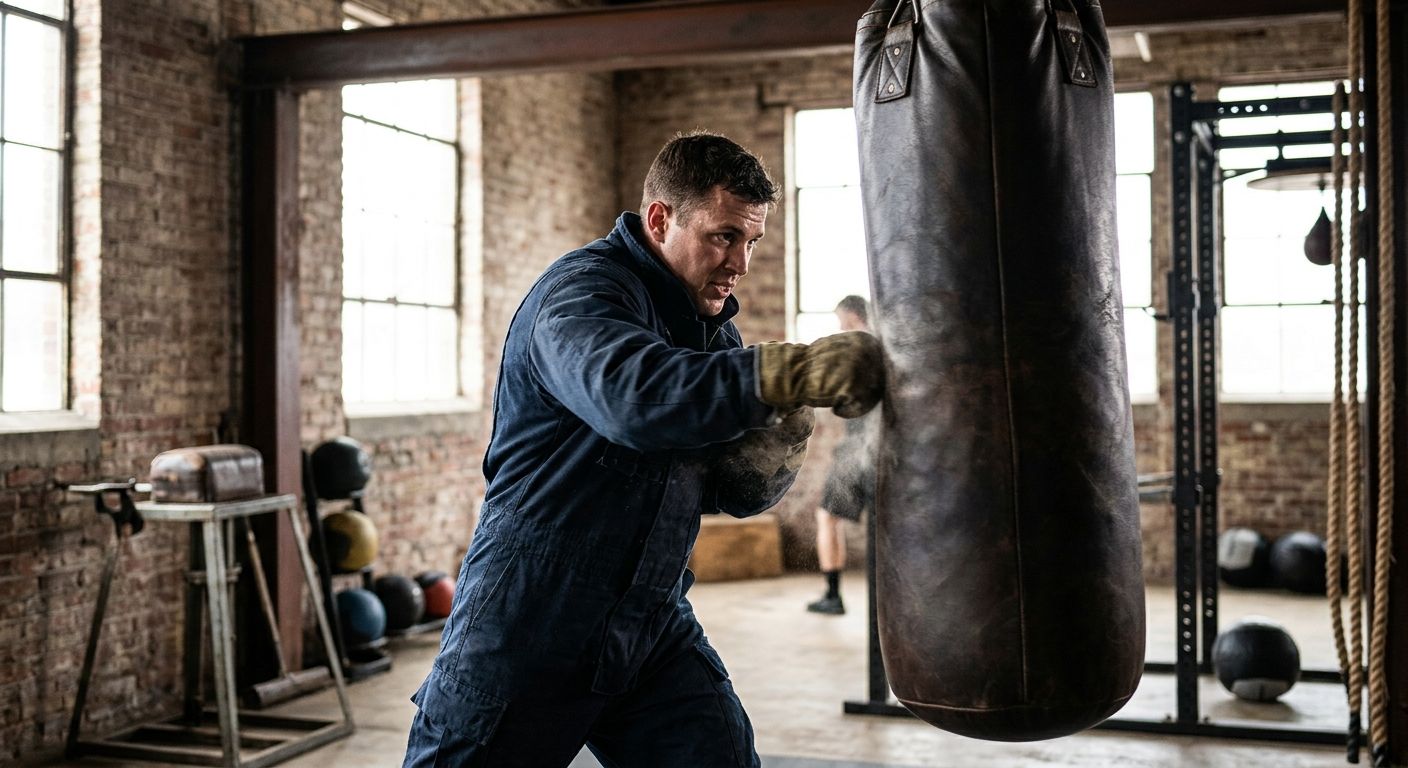
Boxing conditioning for firefighters means training the specific mix of anaerobic power, grip endurance, and reaction speed the job demands — not a generic gym cardio routine borrowed from a fitness class. The steps below build that conditioning around rotating shifts, using round-based intervals, mitt work, and footwork drills that map directly onto forcible entry, stair climbs, and rapid-response bursts.
• Boxing conditioning for firefighters uses 3-minute round intervals to mirror short, maximal-effort work cycles on scene. • Better Through Boxing runs live 1-on-1 sessions by Zoom, built to fit 24 and 48-hour shift rotations without a gym commute. • Grip and forearm endurance training matters as much as cardio for firefighters carrying tools and hose lines. • Skip sparring until footwork and defense are solid — most injuries in early boxing training come from rushing contact work.
Why boxing conditioning matters for firefighters
Firefighters don't get steady-state work. A call is a short, maximal burst — forcing a door, hauling a charged line, climbing four flights in full gear — followed by unpredictable recovery time. That's the same energy pattern a boxing round trains: three minutes of hard output, one minute of rest, repeat. Shift schedules are the other constraint. A 24 or 48-hour rotation doesn't line up with a gym's class calendar, which is why firefighters searching for boxing conditioning in 2026 tend to land on live virtual coaching or in-home sessions instead of a membership they'll use twice a month. Better Through Boxing structures private sessions around a client's calendar rather than a fixed class time, which is the main reason shift workers use it over a traditional gym. Structural gear commonly runs 45 pounds or more once turnout coat, pants, SCBA, and tools are on — grip and forearm endurance under that load doesn't come from bicep curls, it comes from sustained bag work and mitt combinations under fatigue. That's a different training problem than the one most gym programs solve, and it's why a law enforcement boxing coaching guide built for a similarly shift-driven, gear-carrying profession follows nearly the same structure as this one. UPDATE YOUR BASELINE CONDITIONING TEST Before adding rounds, know where you're starting. A baseline test tells you whether the bottleneck is cardio, grip, or footwork — training the wrong one wastes weeks. • Time three rounds of shadowboxing (3 minutes on, 1 minute rest) and note when form breaks down • Test a dead hang or towel grip hold for max time • Run a stair climb in gear if your department allows it, and time it • Track heart rate recovery one minute after the last round • Log results so you can compare in four to six weeks TRAIN THE 3-MINUTE ROUND STRUCTURE Most general fitness apps use 30 or 45-second intervals. Boxing rounds run 3 minutes because that's how long a fighter sustains output before a real recovery window — the same duration firefighters spend on hard, sustained tasks at a scene. • Shadowbox 3 rounds at moderate pace before adding intensity • Add a heavy bag for rounds 2 through 4 once form is solid • Build to 6 rounds total before adding combinations under fatigue • Use a round timer app instead of guessing — consistency matters more than intensity in week one This is the point where a live coach earns a spot in the plan. A 30-minute Zoom session with Coach Chris Persaud covers round pacing, corrects stance drift under fatigue, and catches the technique breakdown a phone app can't see. DEVELOP HAND SPEED AND REACTION TIME Forcible entry and rapid tool transitions reward fast hands more than raw strength. Reaction drills train the nervous system to fire faster, not just the muscles to work harder. • Drill the Core 4 punches (jab, cross, hook, uppercut) for speed, not power, in 30-second bursts • Use a reaction ball or tennis ball toss-and-catch between combinations • Add a partner or coach calling out combinations you can't predict • Shadowbox in front of a mirror to check that speed isn't costing you form The reaction drills for hand speed guide breaks these down further if you want a standalone session focused only on speed work. STRENGTHEN GRIP AND FOREARM ENDURANCE Grip fails before cardio does when you're gloved up on a bag for six rounds. Forearm fatigue also shows up fast when hauling hose or forcing a door an hour into a call. • Wrap hands properly before every session to protect the wrist and reduce grip fatigue • Add towel dead hangs, 20-30 seconds, between rounds • Work heavy bag combinations to failure on the last round of a session, not the first • Farmer carries with equipment bags double as functional grip work BUILD FOOTWORK FOR UNEVEN TERRAIN Boxing footwork trains balance under pressure — pivoting, cutting angles, staying square — which transfers directly to moving across debris, hose lines, and uneven ground without losing stability. • Drill the pivot step against a wall or fence line before adding movement • Practice lateral slides in both directions, not just forward-back • Add a partner applying light pressure to test balance recovery • Shadowbox on a slight incline or uneven mat once basic footwork is solid SCHEDULE TRAINING AROUND SHIFT ROTATIONS The biggest reason firefighters quit a conditioning plan isn't the workout — it's the schedule. A 24-hour shift followed by 48 or 72 hours off means a rigid weekly gym schedule rarely survives a month. • Book two 30-45 minute sessions on off-days rather than one long weekend session • Use live virtual sessions on shift-adjacent days when travel time isn't an option • Track sessions against your shift calendar, not a generic weekly template • Build in a lighter technique-only session the day after a 24-hour shift instead of skipping entirely ADD MITT WORK FOR TECHNIQUE UNDER FATIGUE Mitt work is where technique either holds up or falls apart once you're tired — exactly the condition you're training for. A coach holding mitts adjusts combinations in real time and forces correct form on round six, not just round one. • Start with basic combinations at moderate pace for the first two rounds • Increase mitt speed and add defensive slips by round three • Finish with a fatigue round — mitts thrown fast, form checked hardest • Debrief after the session on what broke down first Verdict: firefighters get more from round-based interval training with live coaching correction than from a generic HIIT app, because the failure points — grip, footwork, form under fatigue — need a coach's eyes, not just a timer.
Common mistakes firefighters make with boxing conditioning
• Training hard the day right after a 24-hour shift. Accumulated fatigue plus a high-intensity round session is how form breaks down and injuries start. • Treating boxing as pure cardio. Skipping stance, guard, and footwork means the conditioning gains don't transfer to the job's actual movement demands. • Ignoring grip and forearm work. Cardio-only programs miss the exact muscle group that fails first under gear and tool loads. • Hard bag work without properly fitted gear. Wrist wraps and gloves that don't fit right cause more problems than the training intensity does. • Scheduling one long weekly session instead of two shorter ones. Volume on a single day doesn't build the same conditioning as consistent, shift-matched frequency. Book a Session Around Your Shift Live 1-on-1 boxing coaching with Coach Chris Persaud, by Zoom or in-home.
FAQ
What's the best boxing conditioning program for firefighters? A round-based program using 3-minute intervals with live coaching correction works best for firefighters, since it trains the same short-burst, high-output pattern as a call and fixes form before fatigue sets in. Better Through Boxing runs this format as private Zoom or in-home sessions built around shift schedules. Is boxing training useful for firefighter physical ability tests? Yes. Boxing conditioning builds the grip endurance, anaerobic capacity, and short-burst power that overlap with forcible entry and stair-climb tasks. It won't replace event-specific drills, but it strengthens the conditioning those events demand. How much do private boxing lessons cost for firefighters? Pricing varies by coach, session length, and whether training is virtual or in-person. Check current session details directly on the coach's site rather than relying on older published figures. Can firefighters train boxing around 24-hour shifts? Yes, if the schedule is built around off-days instead of a fixed weekly class time. Two shorter sessions on non-shift days beats one long session that competes with recovery time. Is virtual boxing coaching as effective as in-person for firefighters? Live virtual coaching delivers real-time correction as long as the camera angle shows full stance and footwork. It removes the travel time that makes in-person sessions hard to keep on a rotating shift. How many rounds should firefighters drill per session? Start with 3 rounds and build to 6 over four to six weeks. Jumping straight to high round counts before conditioning develops leads to form breakdown, so fatigue-round work only gets added once the earlier rounds stay clean. Does boxing help with firefighter grip strength? Yes. Sustained bag work and mitt combinations train grip endurance under load, which transfers to gripping tools and hose lines for extended periods. Grip fatigue is one of the first limiters on scene, and most general fitness programs skip training it. What equipment do firefighters need to start boxing conditioning at home? Hand wraps, gloves, and a heavy bag cover the basics; a reaction ball adds speed work. A webcam and enough open space to shadowbox and swing a bag is all that's needed for live virtual sessions.
One last thing
Most firefighters training alone default to a fixed weekly schedule because that's how gyms are built — then quit within a month when a 24-hour shift wrecks the plan twice in a row. Match the training schedule to the shift calendar first, then pick the workout. A coach who can move a session to your off-day matters more in 2026 than which app or bag brand you use.
Train with Coach Chris
Ready to put this into practice with a coach watching every rep? Better Through Boxing is private, 1-on-1 coaching with Christopher Persaud — CoachUp's #1 ranked NJ trainer. Train live online over Zoom from anywhere in the world, or work the mitts in person across New Jersey. Book a session at betterthroughboxing.com and get real-time corrections on your stance, footwork, and punches.
Train anywhere with the Ronin Box app
Voice-cued boxing workouts, round timer, and progress tracking — coached by Chris, right in your pocket.

Scan to install