

Boxing Coaching for Postpartum Fitness: 2026 Guide
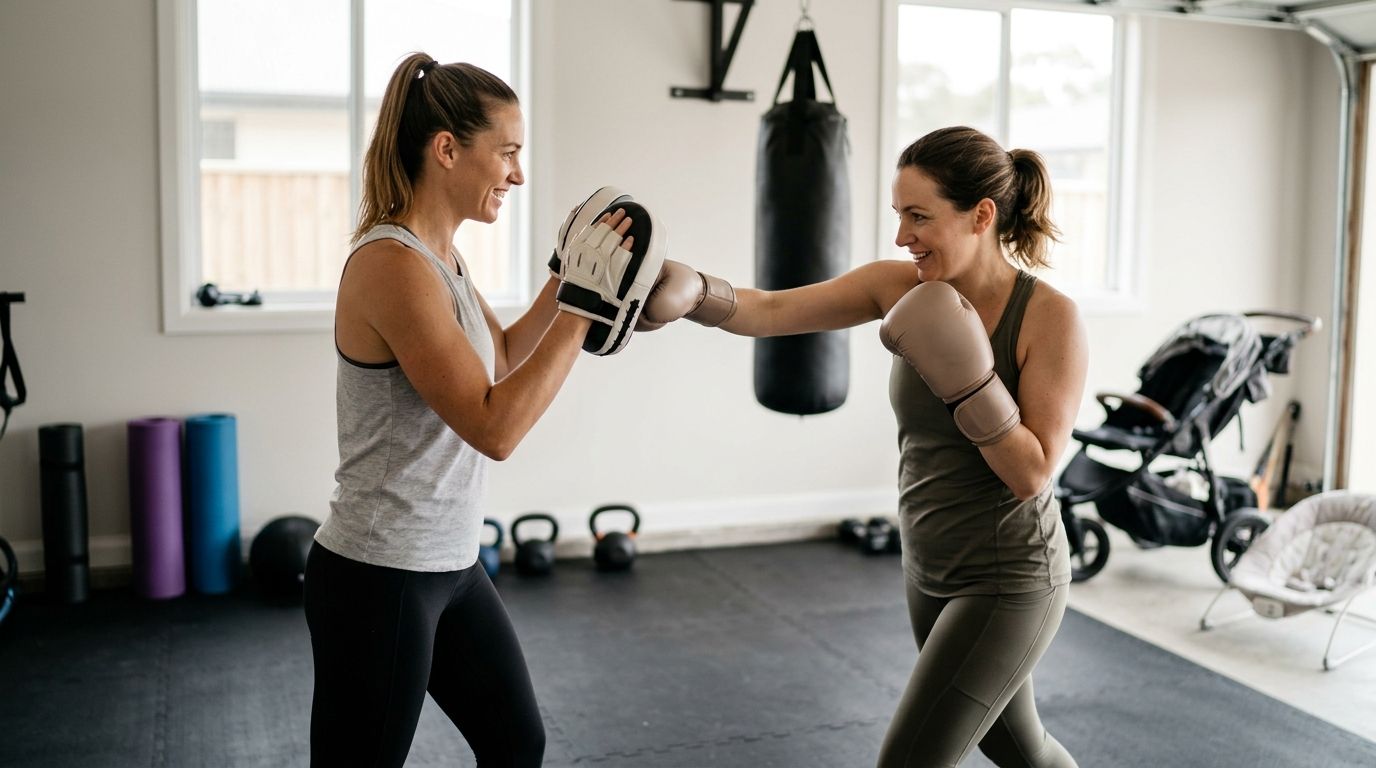
Boxing coaching for postpartum fitness is a structured return-to-activity plan that rebuilds core strength, footwork, and conditioning after childbirth without rushing back to pre-pregnancy intensity. New mothers need a different on-ramp than a typical beginner: pelvic floor recovery, diastasis recti screening, and unpredictable sleep and feeding schedules change how volume and intensity should be introduced. A postpartum boxing plan front-loads stability and breath control, then adds power once the core reconnects.
• Boxing coaching for postpartum fitness works best when medical clearance and pelvic floor checks come before the first punch, not after. • Private virtual coaching removes the childcare barrier that keeps most postpartum women out of group boxing classes. • Better Through Boxing runs live 1-on-1 Zoom sessions with Coach Chris Persaud, built around real stance and footwork, not just cardio. • Stance and footwork come first for 2-3 weeks; full-power combinations wait until core control is back. • Diastasis recti symptoms (doming, bulging at the midline) mean stopping and modifying that session, not pushing through it.
Why boxing coaching matters for postpartum fitness
A postpartum body is not a deconditioned body in the way a sedentary adult's is. Connective tissue, pelvic floor musculature, and abdominal wall integrity have all changed during pregnancy and delivery, and a generic "beginner boxing" program doesn't account for that. Coaching built for this segment starts with breath mechanics and pelvic floor engagement before it ever touches punch power, because straining against a still-healing core undoes the recovery work already happening. Schedule is the other constraint that generic fitness programming ignores. Feeding windows, nap schedules, and unpredictable nights mean a fixed 6pm gym class is often the first thing to fall off the calendar. Coaching delivered live over Zoom or in-home removes the commute and the childcare logistics, which is the actual reason most postpartum women drop fitness routines within the first eight weeks, not lack of motivation. The realistic verdict: boxing coaching for postpartum fitness works when it's private, paced around core recovery first, and delivered somewhere you don't need a babysitter to attend. GET MEDICAL CLEARANCE BEFORE YOUR FIRST SESSION Most providers clear vaginal deliveries for exercise around six weeks postpartum and C-section deliveries later, often eight weeks or more, depending on healing. Get that clearance in writing or verbally confirmed before booking a single boxing session, virtual or in-person. • Ask your provider specifically about diastasis recti status, not just general "cleared for exercise" • Confirm whether pelvic floor physical therapy is recommended before impact or rotational movement • Mention that boxing includes twisting through the hips and core, not just walking or light cardio • Get a timeline estimate for when combinations and bag work (versus shadowboxing) are appropriate REBUILD YOUR CORE FROM THE INSIDE OUT Punching power comes from hip rotation transferring through a stable core, and a core that hasn't reconnected after pregnancy will compensate through the lower back. Coaching for this segment starts with breath-and-brace drills, not crunches, before introducing rotation. • Practice 360-degree breathing (ribs expand in all directions, not just the belly) for 5 minutes before each session • Learn to brace the core on the exhale during a punch, not hold your breath • Screen for doming or bulging at the midline during planks or standing rotation before adding bag work • Add dead bugs and bird dogs as a warm-up before any twisting drill • Delay heavy bag combinations until rotation feels controlled, not just possible CHOOSE A TRAINING FORMAT THAT FITS INFANT CARE The format matters as much as the programming for this segment, because a session you can't attend consistently doesn't help your recovery. In-home coaching and live virtual sessions both remove the two biggest postpartum barriers: driving somewhere and finding childcare for an hour. • In-home private coaching: works if you have space for mitt work and want a coach physically present • Live virtual coaching: works from a living room or garage on your schedule, useful for erratic sleep windows • Group boxing gym classes: usually the least flexible option and rarely built around postpartum pacing • Self-guided apps: cheapest option but no one screening your form or core engagement in real time Better Through Boxing structures sessions as live 1-on-1 boxing coaching over Zoom worldwide, or in-home across the Central New Jersey area, which is the format that best matches a postpartum schedule with unpredictable nap and feeding windows. START WITH STANCE AND FOOTWORK, NOT POWER Stance and footwork rebuild proprioception and balance, both of which shift during pregnancy as your center of gravity moves. This phase should run 2-3 weeks before combinations get added, longer if balance still feels off. • Practice the basic boxing stance against a wall or mirror for weight distribution • Work forward and backward shuffle steps without punching for 10-15 minutes per session • Add pivot drills once the stance feels stable under slow movement • Introduce shadowboxing at 50% speed before touching mitts or a bag TRACK FATIGUE AND PELVIC FLOOR SYMPTOMS EVERY SESSION Postpartum fatigue compounds fast, especially with disrupted sleep, and pushing through it increases injury risk in a body that's still healing. A short check-in before and after each session catches problems before they become setbacks. • Rate energy on a simple 1-10 scale before starting; below a 4 means a lighter session • Note any leaking, heaviness, or pelvic pressure during or after training • Stop and modify immediately if doming appears at the midline during any drill • Log sleep hours the night before, since under 4-5 hours changes what the body can safely handle that day LAYER IN CONDITIONING GRADUALLY Once stance, footwork, and core control are solid, conditioning volume can increase. This is where boxing's interval structure works in your favor, since rest periods are already built into round-based training. • Start with 2-minute rounds and 1-minute rest, not full 3-minute professional rounds • Cap total session length at 30-40 minutes for the first month back • Add reaction drills and light footwork ladders before high-impact jump rope work • Increase round count before increasing round intensity SET A REALISTIC WEEKLY CADENCE Two sessions per week is a sustainable starting cadence for most postpartum schedules, with the option to add a third once energy and core control stabilize. Consistency at a lower volume beats an ambitious schedule that collapses after two weeks. • Book sessions at the same time slots to build a routine around infant naps or feeds • Build in a buffer week if sleep regresses or illness hits the household • Reassess cadence at the one-month and three-month marks, not just once “A core that hasn't reconnected after pregnancy will always compensate through the lower back, no matter how good the punch looks.”
Comparing postpartum boxing coaching options
Verdict: private virtual or in-home coaching wins for postpartum fitness because it's the only format built to pace around core recovery instead of a fixed class curriculum. Group classes and apps aren't wrong choices, but neither one screens for diastasis recti or adjusts a session in real time when something feels off. Book a private postpartum boxing session Live 1-on-1 Zoom coaching with Coach Chris Persaud, paced to your recovery.
Common mistakes postpartum women make with boxing training
• Skipping the pelvic floor check. Jumping straight into punching mechanics without confirming core and pelvic floor status turns a fitness win into a setback. • Copying a pre-pregnancy training plan. The volume and intensity that worked before pregnancy is almost always too much in the first 8-12 weeks back. • Choosing a group class for the social factor over the pacing fit. A class schedule that doesn't flex around a newborn gets skipped, which stalls progress more than a slower private cadence would. • Ignoring doming or bulging at the midline. Treating it as normal soreness instead of a signal to modify the session delays diastasis recti recovery. • Measuring progress by punch power instead of control. Power comes back on its own once stance, footwork, and core bracing are solid; chasing it early just rebuilds bad compensation patterns.
FAQ
When can I start boxing coaching after having a baby? Most providers clear light exercise around six weeks after a vaginal delivery and eight weeks or more after a C-section, but get individual clearance first. Boxing specifically should wait until a provider confirms core and pelvic floor status, not just general fitness clearance. Is boxing safe for diastasis recti? Boxing can be modified around diastasis recti by avoiding rotational load and heavy bracing until the abdominal wall reconnects. A coach who screens for doming or bulging during drills can adjust the session instead of pushing through it. What's the best boxing coaching format for a new mom? Private virtual or in-home coaching is the best fit for postpartum schedules because sessions can flex around feeding and nap windows. Group gym classes run on a fixed schedule that's harder to sustain with a newborn. How often should postpartum women train boxing per week? Two sessions per week is a realistic starting cadence, with a third added once energy and core control stabilize. Consistency at lower volume beats an ambitious schedule that falls apart after two weeks. Do I need boxing experience to start postpartum coaching? No experience is necessary; postpartum coaching starts with stance, footwork, and core reconnection before any punching mechanics. Beginners and returning boxers both start at the pacing their body is cleared for. How much do private boxing lessons cost for postpartum fitness? Pricing varies by coach, format, and session length, so check current rates directly with the coaching provider you're considering. Virtual sessions are often priced differently than in-home coaching. Can boxing help with postpartum weight loss? Boxing's interval structure supports calorie burn through rounds of work and rest, but weight loss results depend on overall activity, nutrition, and recovery, not the workout alone. Core and pelvic floor recovery should take priority over weight loss goals in the first 8-12 weeks. What should I look for in a postpartum boxing coach? Look for a coach who asks about medical clearance, screens for diastasis recti, and adjusts pacing session to session rather than running a fixed curriculum. Live 1-on-1 formats make that screening easier than group classes.
One last thing
The biggest variable in postpartum boxing outcomes isn't the workout itself, it's whether the format survives a bad sleep week. A session that can move to a different hour or happen from a living room in 2026 gets finished; a fixed class slot that requires a drive and a babysitter gets skipped, and a skipped routine is how most postpartum fitness plans quietly end by month three.
Train with Coach Chris
Ready to put this into practice with a coach watching every rep? Better Through Boxing is private, 1-on-1 coaching with Christopher Persaud — CoachUp's #1 ranked NJ trainer. Train live online over Zoom from anywhere in the world, or work the mitts in person across New Jersey. Book a session at betterthroughboxing.com and get real-time corrections on your stance, footwork, and punches.
Train anywhere with the Ronin Box app
Voice-cued boxing workouts, round timer, and progress tracking — coached by Chris, right in your pocket.

Scan to install